

Key Takeaways
Why Gym-Free Exercise Works — and Who It's For
The assumption that real exercise requires a gym membership, specialized equipment, or dedicated workout blocks is one of the most common barriers people cite for not moving more. In practice, the physical benefits of regular moderate activity — improved cardiovascular health, better mood, stronger muscles, improved sleep quality — don't require a particular setting. They require consistency over time.
This guide is specifically for people with ordinary, busy American schedules: working parents, people in desk jobs, anyone who has tried and abandoned fitness routines before, and anyone who simply doesn't want to commute to a gym. If you're brand new to exercise and the whole idea feels overwhelming, you may want to start with a judgment-free introduction to moving more before continuing here.
If you're curious how home-based movement compares to a gym setup across cost, results, and convenience, an honest comparison of home vs. gym workouts lays out the real trade-offs.
Talk to Your Doctor Before Starting
This article is general health information, not personalized medical advice. If you have a chronic condition, recent injury, or have been sedentary for a long time, check with a qualified healthcare provider before significantly increasing your activity level. They can help you identify any precautions specific to your health situation.
What You'll Need Before You Start
One of the practical advantages of gym-free movement is how little you actually need to begin. The list is short:
What you will need
Smartphone or basic pedometer
Tracks daily step count and movement time, giving you concrete feedback on your activity habits.
Resistance bands
Provide adjustable resistance for strength exercises at home without heavy equipment.
Yoga mat or folded blanket
Cushions floor-based exercises like stretches, core work, and bodyweight movements.
Timer or interval app
Keeps workout intervals structured so you stay on track during short sessions.
None of the optional tools are necessary to start — and buying equipment before establishing a habit often just adds clutter. Focus on the habit first; gear can come later if you decide you want it.
Make Your Environment Do the Work
Place your workout clothes next to your bed the night before. Keep a resistance band on the couch armrest. Put your walking shoes by the front door. Reducing friction between you and movement — even by 30 seconds — meaningfully increases follow-through. Your environment shapes your behavior more than motivation does.
Step-by-Step: Building Your Gym-Free Movement Habit
Follow these steps in order, especially if you're starting from little or no regular activity. Skipping to later steps before the earlier ones are stable is one of the most common reasons new routines collapse. For more on that pattern, see what consistent exercisers actually do differently.
Decide on your honest starting point
Before you choose any exercises, get clear on where you actually are — not where you think you should be. If you're currently sedentary, committing to daily 45-minute workouts almost guarantees burnout within weeks. Research on habit formation consistently shows that starting smaller than feels ambitious is a better predictor of long-term consistency than starting at full intensity.
Ask yourself: What's the smallest amount of movement I could realistically do on my three busiest days? That number is your real starting point.
Identify two or three anchor points in your existing day
Anchor points are moments that happen reliably every day — making coffee, eating lunch, or sitting down to watch something in the evening. The strategy of attaching a new behavior to an existing one is sometimes called habit stacking, and it removes the need to find motivation from scratch each time.
Examples: 10 bodyweight squats while the coffee brews; a 15-minute walk immediately after lunch; a set of push-ups before your evening shower. These don't need to be intense — they need to be consistent.
Choose three to five exercises that require no equipment
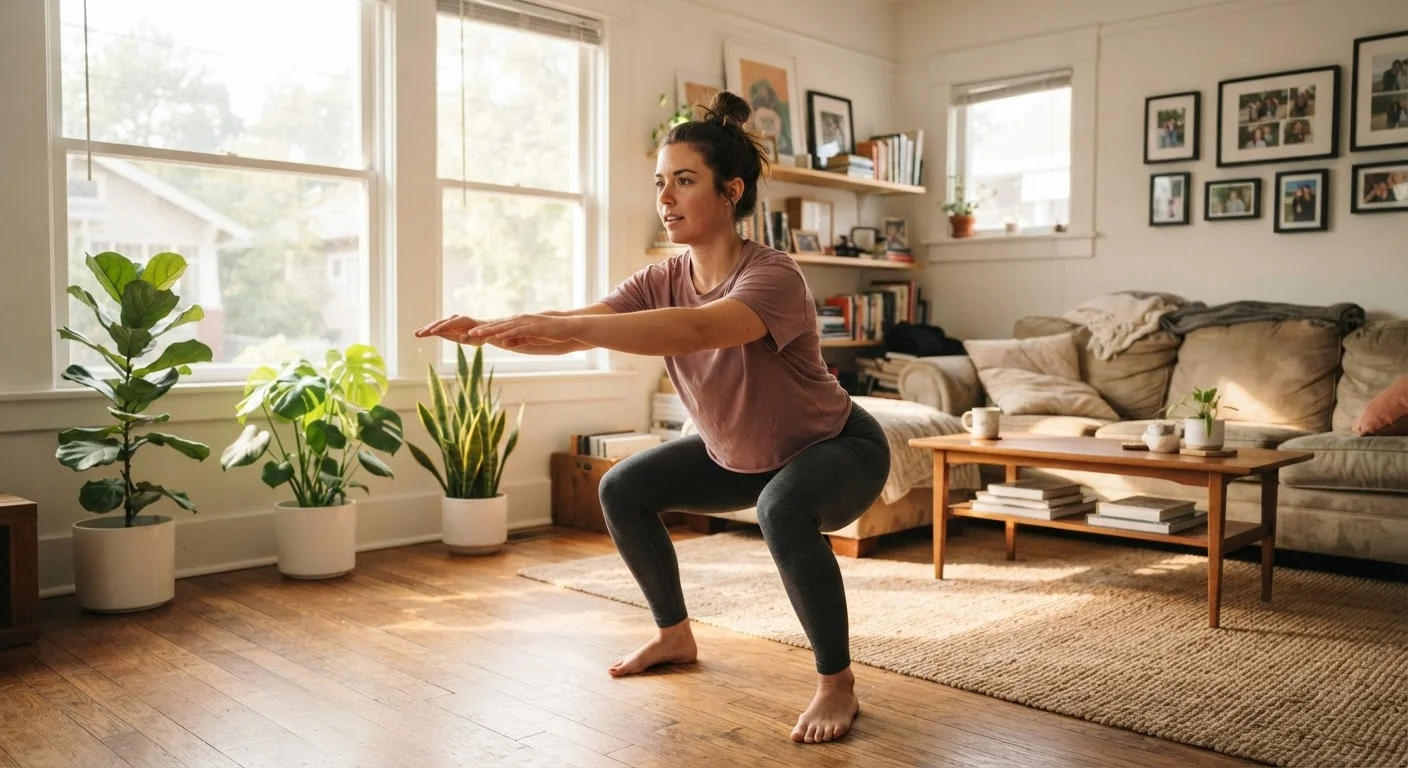
A short, repeatable menu of moves reduces decision fatigue. Solid no-equipment options that work major muscle groups include: bodyweight squats (legs and glutes), push-ups (chest, shoulders, triceps — do them from your knees if needed), glute bridges (glutes and lower back), standing marches (cardiovascular warm-up), and plank holds (core stability).
You don't need variety to start. Mastering a small set of movements done consistently will produce more progress than a complicated rotating routine done sporadically.
Accumulate movement throughout the day
You don't have to exercise in a single continuous block. Public health guidance generally recognizes that movement accumulated across shorter bouts throughout the day contributes to overall activity goals, much like a single session would. A 10-minute walk after each meal, for example, adds up to 30 minutes of daily walking.
Look for natural opportunities: take stairs instead of elevators, park farther away, stand during phone calls, or do a quick movement break between tasks at home. See which everyday activities genuinely count toward your activity goals to learn what qualifies.
Track what you actually do — not what you planned
Tracking completed activity, rather than planned workouts, gives you accurate information about your real habits and creates a small psychological reward each time you log something. This doesn't need to be an elaborate system: a simple tally in a notebook, a note on your phone, or even a paper calendar where you mark a checkmark on completed days all work.
Over two to three weeks, patterns become visible. You'll see which anchor points are holding and which ones keep getting skipped — valuable information for adjusting your plan.
Adjust the plan when life interrupts — and it will
Missed days are not failures; they're a normal part of any real-life habit. The problem isn't missing a day — it's the decision to quit after missing one. Research on habit maintenance suggests that one missed session has negligible impact on long-term progress, but treating it as evidence that the whole effort has failed is what actually derails people.
Build in a standing rule: never miss the same anchor point twice in a row. If Monday's lunchtime walk didn't happen, Tuesday's must. That single rule prevents a slip from becoming a slide. For a deeper look at why routines fall apart and how to avoid the most common traps, see why most exercise routines fall apart in the first month.
Don't Ignore Pain or Dizziness
Mild muscle soreness after new activity is normal, but sharp pain, joint pain, chest tightness, or dizziness are not. Stop any activity immediately if you experience these symptoms and seek medical attention. Pushing through genuine pain signals is one of the fastest paths to an injury that sidelines you entirely.
Keeping the Habit Going Past the First Few Weeks
The first two to four weeks are when most people quit — not because they can't physically do the exercises, but because the habit hasn't yet become automatic. During this window, external structure matters more than internal motivation.
A few practices that support longer-term consistency:
- Tell one person your plan. Social accountability — even informal — increases follow-through significantly in behavioral research.
- Progress gradually. Add one extra repetition, or two extra minutes of walking, per week. Small, visible progress is more motivating than jumping to a harder level too soon.
- Pair movement with nutrition awareness. Physical activity and eating habits reinforce each other. Explore simple everyday nutrition guidance as a complementary habit.
- Recognize non-scale wins. Better sleep, easier stair climbing, improved mood, and less afternoon fatigue are all legitimate markers of progress — and often appear before any change in body weight.
This article is for general informational purposes only and is not a substitute for professional medical advice. Consult a qualified healthcare provider before beginning any new exercise program, especially if you have existing health conditions or concerns.