

Key Takeaways
Hands-off automation saves significant time and effort
Robo-advisers handle asset allocation, rebalancing, and sometimes tax-loss harvesting automatically. You don't need to monitor your portfolio or make ongoing decisions.
Low barrier to entry for new investors
Most robo-adviser platforms require minimal starting balances and guide users through a simple onboarding process, making them accessible to beginners with no prior investing experience.
Removes emotional decision-making from the equation
Because the platform manages rebalancing systematically, it reduces the risk of panic-selling during market downturns — one of the most common and costly investor mistakes.
DIY investing can minimize ongoing fees
By selecting low-cost index funds and avoiding advisory fees, self-directed investors can keep more of their returns over long time horizons — a meaningful advantage as portfolios grow.
Full control over your investment decisions
DIY investors can tailor allocations precisely to their goals, values, and tax situation without being bound by a platform's preset models.
Builds genuine financial knowledge over time
Managing your own portfolio deepens your understanding of markets, risk, and personal finance — knowledge that benefits you across other financial decisions too.
Robo-advisers charge ongoing management fees
Even a 0.25% annual fee compounds over decades. On a growing portfolio, that fee adds up to thousands of dollars that would otherwise remain invested.
Limited customization within robo-adviser models
Most robo-advisers use preset portfolios based on risk profiles. Investors with specific preferences — such as excluding certain sectors — may find the options too rigid.
DIY requires time, research, and ongoing attention
Building and maintaining a well-diversified portfolio isn't passive. It requires periodic review, rebalancing, and staying informed — which is genuinely time-consuming.
DIY investors are vulnerable to behavioral mistakes
Without automation, it's easier to react emotionally to market swings — overtrading, panic-selling, or chasing trending assets — all of which can significantly harm long-term returns.
Neither approach guarantees investment returns
Both robo-advisers and DIY strategies are subject to market risk. Past performance of any strategy or platform does not guarantee future results.
Our Verdict
Robo-advisers are a solid starting point for people who want a hands-off, low-effort way to invest without learning every detail of portfolio management. DIY investing suits those willing to put in the time and who are confident managing their own decisions without letting emotions drive the wheel. Neither is universally better — the right approach is the one you'll actually stick with.
Robo-advisers are best for busy or newer investors who want automation and simplicity; DIY investing suits engaged, self-directed individuals comfortable researching and managing their own portfolios.
What Each Approach Actually Means
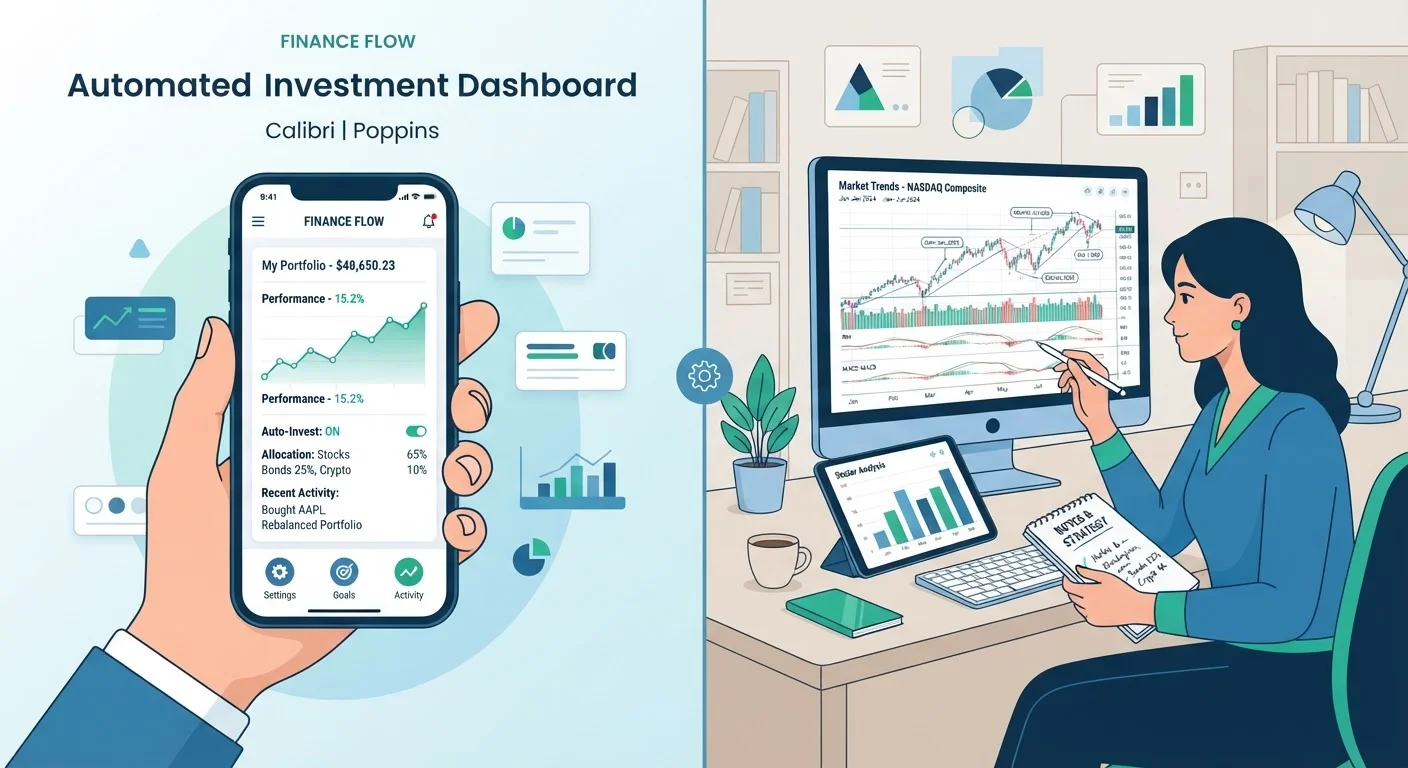
A robo-adviser is an automated platform that builds and manages a diversified investment portfolio on your behalf. You answer questions about your goals, timeline, and risk tolerance, and the platform allocates your money — typically across low-cost index funds or ETFs (exchange-traded funds). It then handles rebalancing and, in some cases, tax-loss harvesting automatically.
DIY investing means you make every decision yourself: which brokerage to use, which assets to buy, how to allocate across stocks, bonds, or funds, and when to rebalance. Platforms available today make it easier than ever to open an account and execute trades with no commissions, but the strategic thinking is entirely on you.
Both approaches can use similar underlying investments — like index funds. The core difference is who is doing the ongoing work. For more context on how underlying fund types compare, see how index funds stack up against actively managed funds.
Pros and Cons at a Glance
Here's a balanced look at what each approach offers and where it falls short.
Hands-off automation saves significant time and effort
Robo-advisers handle asset allocation, rebalancing, and sometimes tax-loss harvesting automatically. You don't need to monitor your portfolio or make ongoing decisions.
Low barrier to entry for new investors
Most robo-adviser platforms require minimal starting balances and guide users through a simple onboarding process, making them accessible to beginners with no prior investing experience.
Removes emotional decision-making from the equation
Because the platform manages rebalancing systematically, it reduces the risk of panic-selling during market downturns — one of the most common and costly investor mistakes.
DIY investing can minimize ongoing fees
By selecting low-cost index funds and avoiding advisory fees, self-directed investors can keep more of their returns over long time horizons — a meaningful advantage as portfolios grow.
Full control over your investment decisions
DIY investors can tailor allocations precisely to their goals, values, and tax situation without being bound by a platform's preset models.
Builds genuine financial knowledge over time
Managing your own portfolio deepens your understanding of markets, risk, and personal finance — knowledge that benefits you across other financial decisions too.
Robo-advisers charge ongoing management fees
Even a 0.25% annual fee compounds over decades. On a growing portfolio, that fee adds up to thousands of dollars that would otherwise remain invested.
Limited customization within robo-adviser models
Most robo-advisers use preset portfolios based on risk profiles. Investors with specific preferences — such as excluding certain sectors — may find the options too rigid.
DIY requires time, research, and ongoing attention
Building and maintaining a well-diversified portfolio isn't passive. It requires periodic review, rebalancing, and staying informed — which is genuinely time-consuming.
DIY investors are vulnerable to behavioral mistakes
Without automation, it's easier to react emotionally to market swings — overtrading, panic-selling, or chasing trending assets — all of which can significantly harm long-term returns.
Neither approach guarantees investment returns
Both robo-advisers and DIY strategies are subject to market risk. Past performance of any strategy or platform does not guarantee future results.
The Cost Question
Cost is one of the most meaningful variables in long-term investing because fees compound just like returns do — only in the wrong direction.
0.25%
Typical robo-adviser annual management fee
Many major robo-adviser platforms charge around 0.25% of assets under management per year, according to publicly available fee schedules.
~0.03%
Expense ratio on broad market index funds
Some of the lowest-cost broad market index funds available in the US carry expense ratios as low as 0.03%, per fund prospectuses.
Robo-advisers typically charge an annual management fee of around 0.25% of your portfolio balance, on top of the underlying fund expense ratios. On a $10,000 portfolio, that's roughly $25 per year in advisory fees — modest, but ongoing. Some platforms charge more, especially for access to human advisers.
DIY investors using low-cost index funds can minimize costs significantly, sometimes paying only the fund's expense ratio (which can be as low as 0.03% on broad market index funds). But DIY can get expensive if you trade frequently, choose higher-cost funds, or make tax inefficient moves without realizing it.
The bottom line: cost matters, but paying a small fee for a service that keeps you invested and disciplined may be worth more than saving on fees while making costly behavioral mistakes. Emotional decisions and fee blindness are among the most common ways investors hurt their own results.
Who Should Consider Which Approach
There's no one-size-fits-all answer, but some patterns are worth noting.
A robo-adviser may suit you if:
- You're new to investing and don't yet know how to build a diversified portfolio.
- You want to set things up and not think about it regularly.
- You're prone to reactive decision-making when markets drop.
- Your portfolio is smaller and the absolute fee impact is limited.
DIY investing may suit you if:
- You enjoy learning about markets and financial concepts.
- You're comfortable staying the course without hand-holding during volatility.
- You want maximum control over asset allocation and tax strategy.
- You're willing to invest time in research and ongoing portfolio review.
Some investors split the difference — using a robo-adviser for their retirement account while managing a smaller taxable account themselves. Whichever path you choose, consistency matters more than perfection. Building a sustainable investing habit is often the bigger challenge.
Mixing Both Approaches Is an Option
You don't have to pick just one method for your entire financial life. Some investors use a robo-adviser for a tax-advantaged retirement account (like an IRA or 401(k) rollover) while managing a smaller taxable brokerage account themselves. This hybrid approach lets you benefit from automation where it matters most while still developing hands-on experience. Just be mindful of your overall asset allocation across all accounts.
This article is for general informational purposes only and does not constitute personalised financial or investment advice. Consider speaking with a licensed financial adviser before making investment decisions.