

Key Takeaways
Car Depreciation
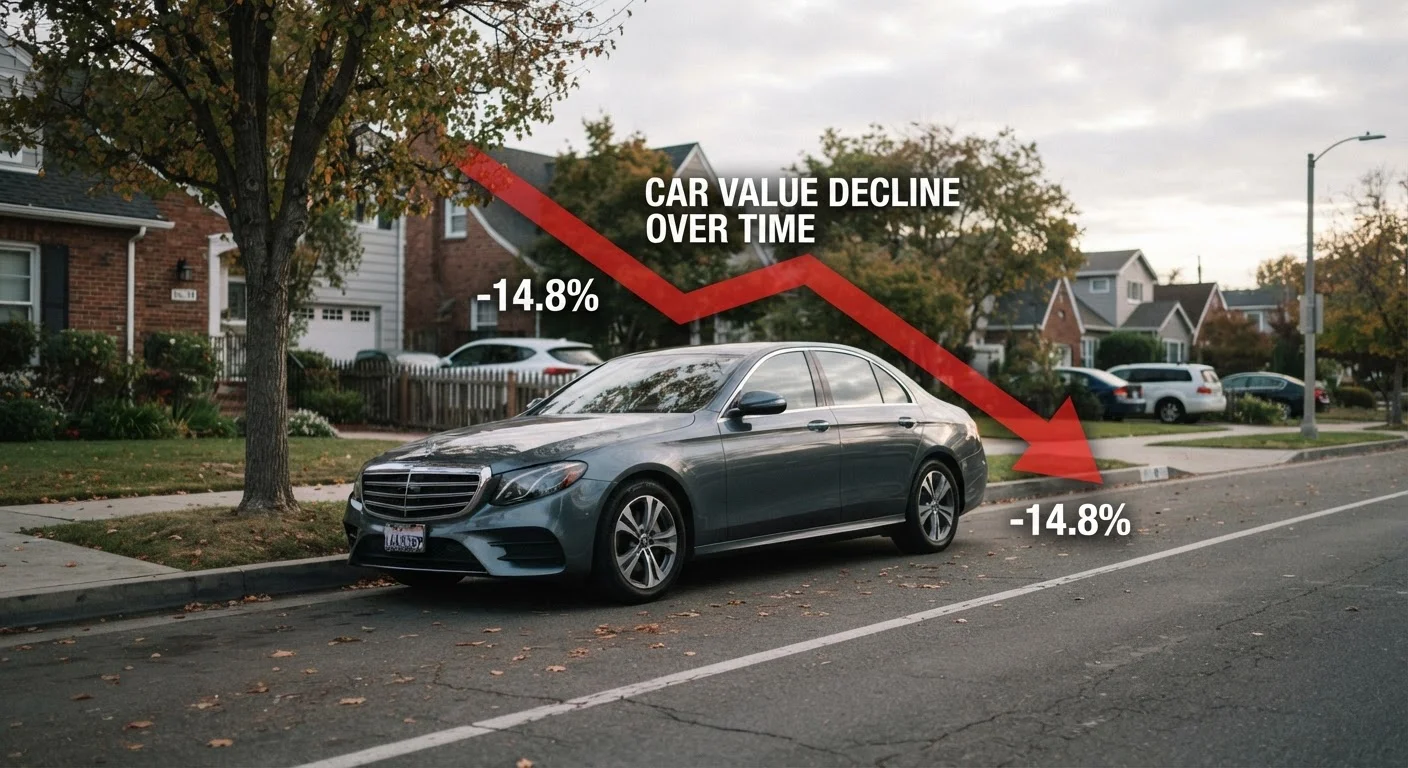
Depreciation is the loss of a vehicle's value over time. Every car depreciates - meaning what you paid for it and what someone else will pay you for it later are two very different numbers. It's one of the largest ongoing costs of owning a car, even though you never write a check for it directly.
Depreciation is typically measured as a percentage of the original purchase price lost per year, and is front-loaded - meaning the steepest drops happen in the first few years of ownership.
What Depreciation Actually Means
When you drive a new car off the lot, its value drops - sometimes significantly - almost immediately. That drop is depreciation. It's not a fee or a charge; it's simply the difference between what you paid and what the car is worth at any given point afterward.
Think of it like this: if you spend $35,000 on a new car today and sell it three years from now for $22,000, you've lost $13,000 to depreciation. That's money gone, spread quietly across every month you owned the vehicle.
Depreciation is part of the fuller picture of what car ownership actually costs. See what car ownership really costs beyond the monthly payment for a broader breakdown of expenses most drivers don't fully account for.
15-25%
Value lost in year one for new cars
Industry estimates consistently show new vehicles lose a significant share of their purchase price within the first 12 months of ownership.
~50%
Typical value lost after five years
Many new vehicles retain only around half their original value after five years, depending on model, mileage, and market conditions.
Why Cars Lose Value the Way They Do
Several forces drive depreciation, and they don't all move at the same speed.
- Age and mileage: The older a car gets and the more miles on the odometer, the less it's worth to a buyer. These two factors are the backbone of any resale calculation.
- Condition: Dents, stains, worn interiors, and mechanical issues signal higher risk to buyers and lower the price accordingly.
- Model popularity: A car with a large, active buyer market holds value better than a niche model with limited demand.
- New model releases: When manufacturers release updated versions, older models of the same vehicle often dip in value.
- Fuel economy and technology trends: Shifts in what buyers want - like a surge in demand for fuel-efficient vehicles - can drag down values for models that don't fit the trend.
The steepest losses usually happen in the first one to three years. After that, depreciation tends to slow, though it never fully stops.
The First Year Is When It Hurts Most
If you're buying new, understand that the largest single-year depreciation hit almost always comes in year one. If your budget is tight, buying a vehicle that's 12-24 months old can get you most of the same car at a meaningfully lower cost - someone else has already absorbed that first-year loss.
How This Affects Your Real-World Decisions
Depreciation isn't just an abstract number - it shapes practical choices.
Buying used vs. new: When you buy a used car that's two or three years old, the previous owner has already absorbed the sharpest depreciation hit. You get more vehicle per dollar, though other costs like repairs may be higher. This is one of the core trade-offs explored in buying vs. leasing a car.
How long you keep the car: Keeping a vehicle long-term spreads the original purchase cost across more years and miles, which generally improves the cost-per-mile picture. Keeping a car long-term vs. replacing it every few years walks through the financial logic on both sides.
Protecting resale value: Routine upkeep - oil changes, tire rotations, addressing small issues early - does more than keep the car running. A vehicle with a clean service history and good condition typically commands a meaningfully higher resale price. Routine car maintenance is one of the simplest levers you have.
What You Can and Can't Control
You can't stop a car from depreciating. Market forces, time, and wear are constants. But you do have influence over some of the variables.
What you can control: how well you maintain the car, how many miles you put on it, and how carefully you treat the interior and exterior. You can also make smarter purchase decisions by researching which types of vehicles have historically held value better in your region - though past trends don't guarantee future resale prices.
What you can't control: broader economic shifts, fuel price swings, changing consumer preferences, and what happens to competing models on the market. These can move resale values in ways no owner can predict or prevent.
The honest takeaway is that depreciation is a cost you're paying whether or not you notice it. Building it into your ownership math - the same way you'd account for insurance or fuel - gives you a clearer picture of what your car is actually costing you.
“Depreciation is the single largest cost of vehicle ownership for most drivers - it just doesn't come with a monthly invoice, so people tend to forget it's there.”
— Consumer automotive financial analysts, General observation reflected across vehicle cost-of-ownership research