

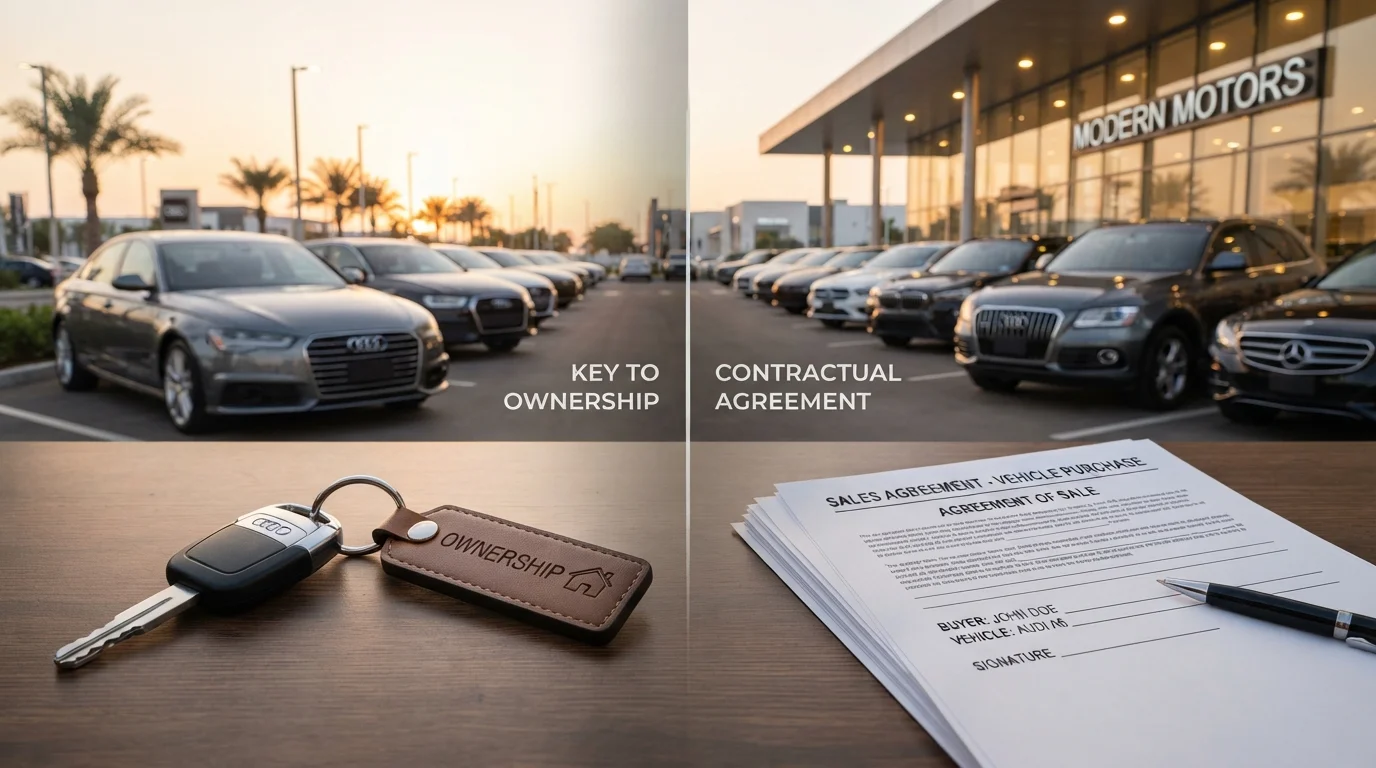
Key Takeaways
Option A
Buying a Car
The path to full ownership and long-term equity.
Best for: Drivers who want to own their vehicle outright, drive without mileage restrictions, and build long-term value.
Option B
Leasing a Car
A fixed-term arrangement with lower upfront costs but no ownership.
Best for: Drivers who prefer lower monthly payments, like driving newer vehicles regularly, and don't exceed average annual mileage.
If you want to own your vehicle and avoid ongoing payments
Buying a Car
Once the loan is paid off, you own the car free and clear - eliminating a monthly payment entirely and giving you an asset you can sell or trade.
If you prefer driving a new car every few years with lower monthly costs
Leasing a Car
Leasing lets you cycle into newer models regularly and typically carries lower monthly payments, though you won't build any equity.
If you drive significantly more than 12,000-15,000 miles per year
Buying a Car
Lease agreements penalize excess mileage with per-mile fees that add up quickly for high-mileage drivers, making buying the more predictable choice.
If you want flexibility to customize or modify your vehicle
Buying a Car
As the owner, you can make any changes you want. Lessees must typically return the car in near-original condition to avoid extra charges.
If managing cash flow matters more than long-term cost savings
Leasing a Car
Lower monthly payments can make a lease easier on a monthly budget, even if the total cost over many years may end up higher than buying.
What You Actually Get With Each Option
The core difference between buying and leasing isn't just the monthly payment - it's what you walk away with. When you buy a car, either outright or through a loan, you own it. Your name is on the title. When the loan is paid off, the car is yours to keep, sell, or trade in whenever you like.
When you lease, you're essentially renting the vehicle for a set period - typically two to four years. You make monthly payments for the right to drive it, but the automaker's financial arm (or a leasing company) holds the title. At the end of the lease, you return the car, unless you choose a buyout option at a price defined in the contract.
This distinction shapes nearly every practical aspect of the experience. Owning a car comes with a full set of ongoing costs - insurance, maintenance, registration - and leasing doesn't exempt you from most of them. The difference is in how much financial risk and flexibility each path carries.
| Criterion | Buying | Leasing |
|---|---|---|
| Ownership | You own the vehicle | Lender holds the title |
| Monthly payment | Typically higher (loan) | Typically lower |
| Mileage limits | None | Usually 10,000-15,000/yr |
| Equity built | Yes - grows as loan is paid | None |
| End of term | You keep the car | Return or buy out |
| Modifications allowed | Yes, freely | Restricted by contract |
| Wear and tear risk | Affects resale value | May incur fees at return |
| Long-term total cost | Generally lower over time | Generally higher if repeated |
Mileage, Wear, and the Fine Print
One of the most practical constraints of a lease is the annual mileage limit. Most standard leases cap you at 10,000 to 15,000 miles per year. Go over that, and you'll typically owe a per-mile fee - often $0.15 to $0.25 per mile - when you return the car. For someone who commutes long distances or takes frequent road trips, those fees can turn a seemingly affordable lease into an unexpectedly expensive one.
Lease contracts also define what counts as acceptable wear and tear. Minor scuffs may be overlooked, but a dent, a stained interior, or worn tires can result in charges at the turn-in inspection. Owners don't face that kind of scrutiny - you absorb the wear yourself, and it simply affects resale or trade-in value later.
10,000-15,000
Typical annual lease mileage cap
Most standard U.S. lease contracts set annual mileage allowances in this range, with overage fees charged per mile at the end of the term.
$0.15-$0.25
Common per-mile overage fee
Excess mileage charges are typically spelled out in the lease agreement and can add hundreds of dollars to the final cost if limits are regularly exceeded.
Buyers also have the freedom to modify the vehicle - adding accessories, changing wheels, or adjusting settings. Lessees typically cannot make permanent modifications without risking fees at return. If how you use and personalize your car matters to you, ownership gives you much more latitude.
Long-Term Costs: What the Numbers Usually Show
Lease payments tend to be lower month-to-month than loan payments for the same vehicle, because you're only financing the car's expected depreciation over the lease term - not its full purchase price. That can make leasing feel more affordable in the short run.
But over the long haul, repeatedly leasing means you're always making payments and never building equity. Buying a car and holding onto it for 8-10 years after the loan is paid typically costs less in total than cycling through a series of leases. Depreciation is a real cost in both scenarios, but as an owner you absorb it - and you also capture any remaining value when you sell.
That said, comparing buying and leasing purely on total outlay doesn't capture everything. Keeping a car long-term has its own trade-offs, including higher repair costs as it ages. For some drivers, the predictability of a lease - fixed payments, a newer car still under warranty - has real practical value, even if it costs more over time.
Leasing and Insurance Requirements
Lease agreements almost always require you to carry higher insurance coverage levels than a state minimum - typically including comprehensive and collision coverage with specific deductible limits. This is worth factoring into your monthly cost estimate. For a broader look at how vehicle financing affects insurance needs, the insurance topic hub covers the basics.
This article is for general informational purposes only and does not constitute financial or legal advice. For guidance specific to your situation, consult a qualified financial professional.