

| Red light urgency | Act immediately or very soon |
| Amber/yellow light urgency | Schedule service, not an emergency |
| Check engine light causes | Hundreds of possible fault codes |
| TPMS trigger threshold | Typically 25% below recommended pressure (U.S. NHTSA TPMS standards) |
| OBD-II scan availability | Free at many auto parts stores |
| Best reference for your car's symbols | Your vehicle's owner's manual |
Why Dashboard Lights Confuse So Many Drivers
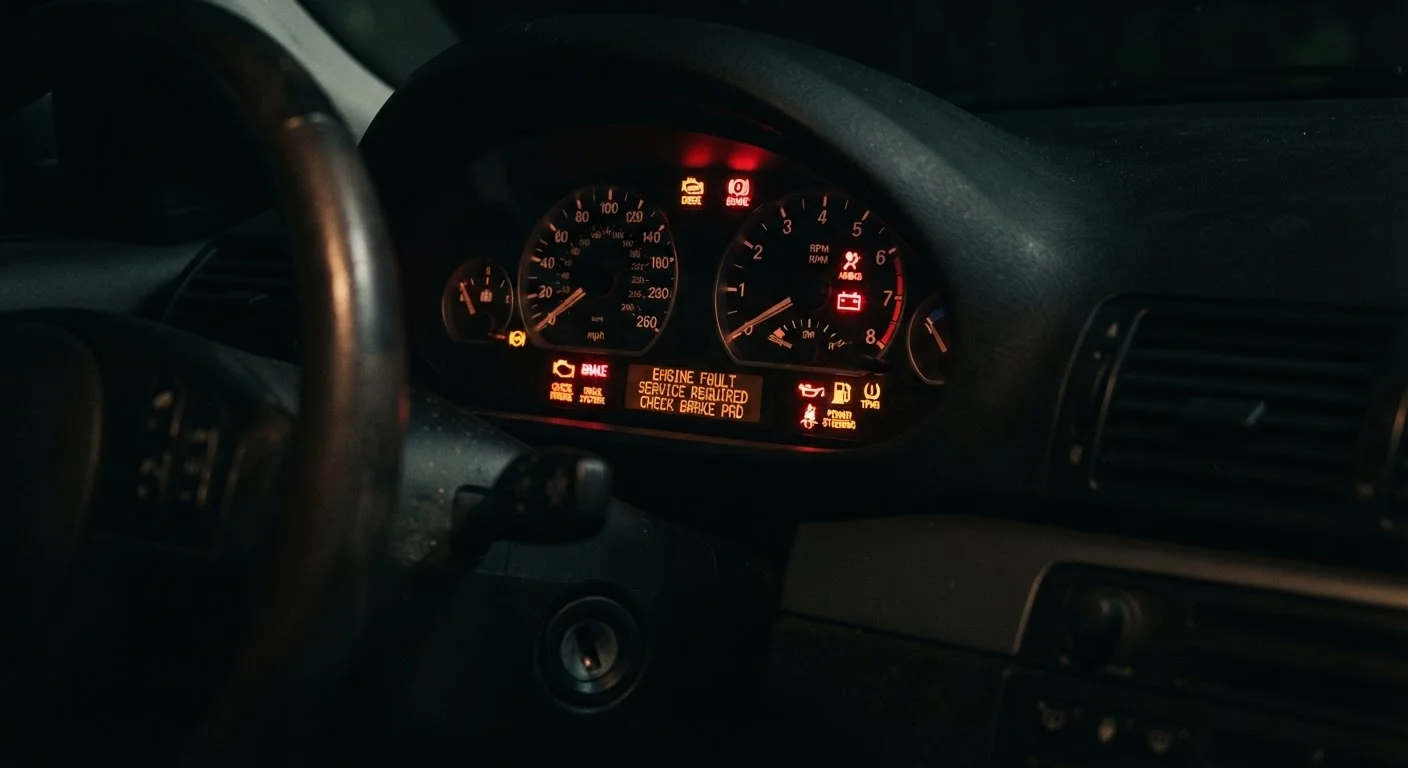
Your car's dashboard can light up like a pinball machine and leave you completely unsure whether to pull over immediately or keep driving. That confusion is understandable - there are dozens of possible symbols, and most drivers never looked at their owner's manual after the first week. This guide cuts through the noise and focuses on the lights you're actually likely to see.
One important framing note: warning lights are categorized by urgency. Red lights generally mean stop soon or pull over now. Amber or yellow lights usually signal something that needs attention but isn't an immediate emergency. Green or blue lights are informational - they confirm a system is active, not that something is wrong.
For the full rundown of your specific vehicle's symbols, the maintenance schedule section of your owner's manual is the most reliable reference you have.
| Red light urgency | Act immediately or very soon |
| Amber/yellow light urgency | Schedule service, not an emergency |
| Check engine light causes | Hundreds of possible fault codes |
| TPMS trigger threshold | Typically 25% below recommended pressure (U.S. NHTSA TPMS standards) |
| OBD-II scan availability | Free at many auto parts stores |
| Best reference for your car's symbols | Your vehicle's owner's manual |
The Lights You're Most Likely to See
Here's what the most common warning lights actually mean - and what to do when they appear.
Check Engine Light (CEL)
An amber light shaped like an engine outline. It means the car's onboard computer has detected a fault somewhere in the engine or emissions system. It could be as minor as a loose gas cap or as serious as a failing catalytic converter - the only way to know is an OBD-II scan.
TPMS
Tire Pressure Monitoring System. An amber light, usually shaped like a flat tire cross-section with an exclamation point. It activates when one or more tires drop significantly below the recommended pressure. Check all four tires - sometimes the culprit isn't obvious.
Oil Pressure Warning
A red oil can icon. This is one of the most serious lights on your dashboard. It means oil isn't circulating at the right pressure, which can lead to catastrophic engine damage within minutes. Pull over safely and turn off the engine.
ABS Warning Light
An amber light reading 'ABS.' Your anti-lock braking system - which prevents wheels from locking during hard stops - has a fault. Your regular brakes likely still work, but the ABS assist may not. Have it inspected before driving in wet or slippery conditions.
OBD-II (Onboard Diagnostics)
A standardized diagnostic port found in all cars sold in the U.S. after 1996. Technicians (and some consumer tools) plug into this port to read fault codes that triggered your warning lights, giving a specific starting point for diagnosis.
Service Engine Soon
Sometimes used interchangeably with the check engine light, but on some vehicles it specifically indicates a scheduled maintenance milestone - like an oil change - rather than a fault. Check your owner's manual to know which applies to your car.
A few additional lights worth knowing:
- Battery / Charging System (red battery icon): Your battery isn't charging properly. Could be the alternator, a loose connection, or the battery itself. Don't ignore this - your car may stop running within miles if the alternator has failed.
- Coolant Temperature (thermometer in liquid): Engine is overheating. Pull over safely and let it cool. Driving on an overheated engine can cause serious, expensive damage.
- Transmission Temperature (gear or thermometer icon): Transmission fluid is too hot. Ease off, reduce load if towing, and get it checked promptly.
It's worth noting that the same symbol can look slightly different across manufacturers. When in doubt, look it up in your owner's manual or have a mechanic scan your vehicle's onboard diagnostic system - most auto parts stores will do a basic scan at no charge.
You may also want to revisit common car ownership myths - some of the confusion around warning lights ties directly to misunderstood maintenance practices.
Don't Assume a Reset Fixes the Problem
Some drivers clear warning lights by disconnecting the battery or using a scan tool - and assume the problem is gone when the light stays off. In reality, some fault codes will return as soon as the car is driven through a full diagnostic cycle. A light that keeps coming back needs a proper diagnosis, not just a reset. Clearing codes without addressing the underlying issue can also mask problems that get worse over time.
When to Stop Driving Immediately
Some lights demand immediate action. If any of the following appear, find a safe place to pull over and don't continue driving until the issue is diagnosed:
- Oil pressure warning - continuing to drive with low oil pressure can destroy your engine in minutes.
- Coolant temperature in the red - engine overheating causes warped heads and blown gaskets.
- Brake system warning - if this comes on while driving (not just the parking brake reminder), your stopping ability may be compromised.
For lights that aren't in the "stop now" category - like the check engine light or TPMS - you generally have time to schedule a service visit rather than pulling off the highway. That said, if a yellow light appears alongside a red one, treat it as urgent.
Understanding these signals is part of being a well-informed driver. The Driving & Safety hub has more guidance on staying aware behind the wheel.