

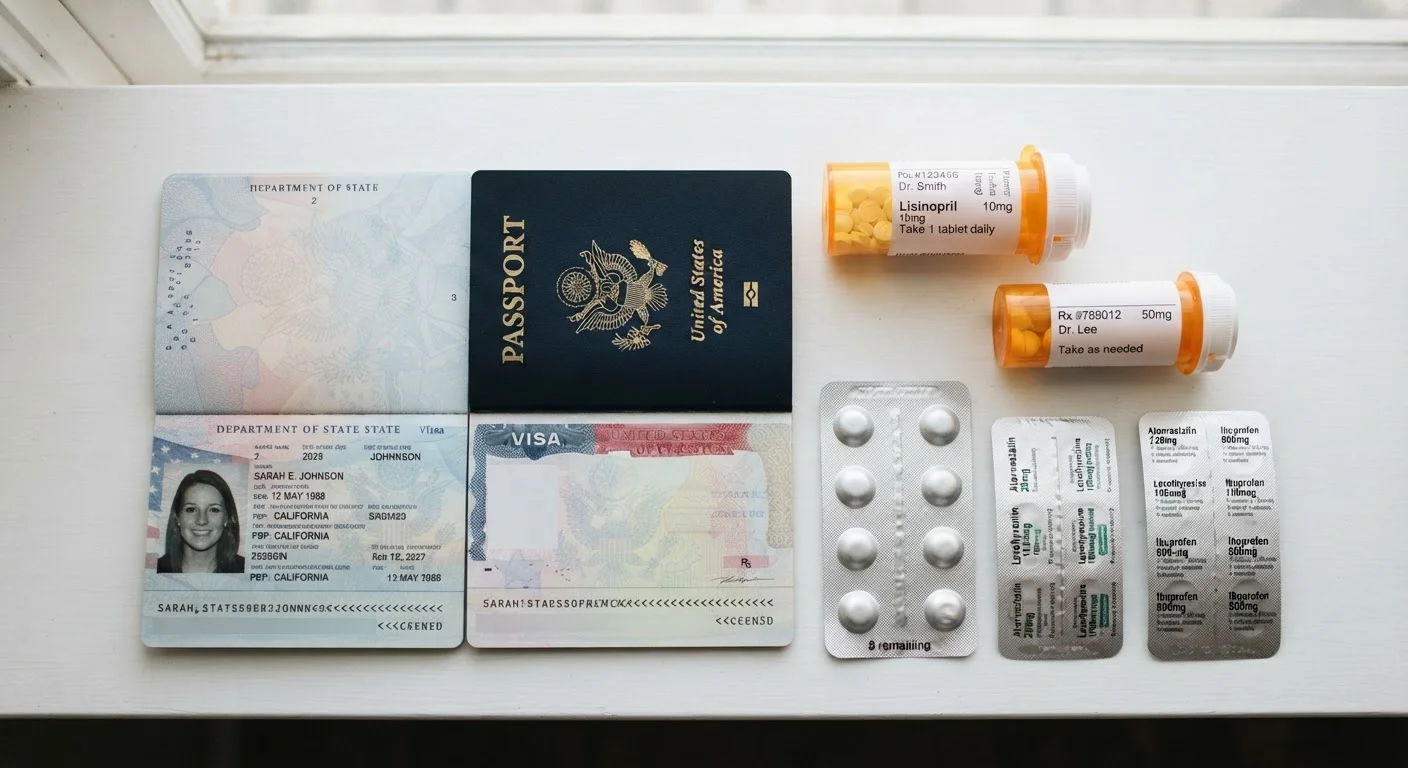
Why Medication Rules Vary So Much by Country
One of the most common surprises international travelers encounter is discovering that a medication they take routinely at home is restricted, prescription-only, or outright banned at their destination. This isn't an edge case — it's a structural reality of global travel. Each country maintains its own controlled-substance schedules, import regulations, and customs procedures, and these rarely align neatly with US rules.
A medication sold freely over the counter in the US — certain codeine-containing cough syrups, for example, or some ADHD stimulants — may be classified as a controlled substance requiring an import permit in countries such as Japan, the United Arab Emirates, or several Southeast Asian nations. Conversely, some medications only available by prescription in the US may be sold OTC abroad. Neither scenario means you're automatically in the clear.
The safest approach: treat every international trip as a fresh research exercise, not a repeat of wherever you've been before. See our pre-departure confirmation checklist for a broader look at what to verify before any international trip.
What Documentation to Carry — and Why
For prescription medications, the baseline is to carry documentation that clearly connects you to the drug. This typically means:
- Original prescription label on the pharmacy bottle, showing your name, prescribing physician, drug name, dosage, and dispensing date.
- A letter from your prescribing physician written in English (and ideally translated into the destination language), stating the diagnosis, medication, dosage, and medical necessity. This is especially important for controlled substances or injectable medications.
- Original packaging where possible. Many countries' customs agencies expect medications to arrive in manufacturer-sealed or pharmacy-labeled packaging.
Using the medication's generic name (its INN — International Nonproprietary Name) in documentation helps customs officers everywhere identify the drug regardless of brand. If your physician's letter uses only a US brand name, ask for the generic equivalent to be included as well.
For controlled substances — opioids, benzodiazepines, certain stimulants, and others — documentation alone may not be sufficient. Some destinations require a government-issued import permit applied for weeks before travel. Check with the destination country's embassy well in advance, since processing times vary.
Quantity Limits and Practical Packing Guidance
Most countries apply some form of quantity limit on medications brought in by travelers. A 30-day supply is a common benchmark, though some destinations allow 90 days with proper documentation, and others cap quantities at less. Carrying amounts that look like commercial quantities — large volumes with no corresponding documentation — raises immediate red flags at customs.
Practical packing guidance that applies across most destinations:
- Keep medications in carry-on luggage, not checked bags, to guard against loss or temperature extremes.
- Do not repackage tablets into unmarked pill organizers for the entire trip without also carrying original labeled containers as backup.
- If you use injectable medications (insulin, biologics), carry a physician's letter and be prepared for additional screening. Some countries require prior notification for injectable controlled substances.
- Over-the-counter medications you rely on — certain antihistamines, decongestants, sleep aids — are worth researching for your destination, as ingredient restrictions vary widely.
If you're also researching entry requirements more broadly, understanding how visa and entry rules work is a useful complement to medication planning — both benefit from the same advance-research habits.
Where to Find Reliable, Current Rules
Given how frequently regulations change, no single guide — including this one — can substitute for official sources. Here's where to look:
- The destination country's embassy or consulate website in your home country. Look for customs, health, or entry requirements sections.
- The destination country's health ministry, which often publishes controlled-substance schedules and import permit procedures.
- The U.S. Department of State's country information pages (travel.state.gov) include health and customs notes relevant to each destination.
- The International Narcotics Control Board (INCB) publishes guidance on traveling with internationally controlled substances.
For travelers heading to multiple countries on a single itinerary, check each destination separately — a medication permitted in one country on your route may not be permitted in the next.
A thorough pre-trip checklist can help you track these verification steps alongside your other departure preparations. Building medication research into your planning routine — ideally four to six weeks before departure — gives you enough time to obtain any required permits or consult your physician about alternatives if a medication is restricted at your destination.
This article is for general informational purposes only and does not constitute medical or legal advice. Medication import regulations change frequently and vary by country. Always verify current rules with official government sources and consult a qualified healthcare professional regarding your specific medications and health needs before traveling.