

Key Takeaways
Why Packing Light So Often Goes Wrong
The standard advice — "pack less" — fails most travelers because it offers no framework for deciding what actually belongs in the bag. Without a system, you either bring everything out of anxiety or cut so aggressively that you land without something genuinely necessary. Both outcomes create friction throughout your trip.
The goal isn't minimalism for its own sake. It's intentional packing: every item earns its weight. For broader trip-planning context, the Trip Planning hub covers the full arc of organizing stress-free travel, while planning habits used by consistent travelers can help you build a repeatable system beyond just the suitcase.
What you will need
What You'll Need Before You Start Packing
Gathering the right inputs before you touch a single item makes the entire process faster and more accurate. Skipping this step is why most people find themselves repacking twice.
Packing list template or app
Provides a structured category framework so nothing is forgotten and impulse additions are easier to spot.
Luggage scale
Lets you verify bag weight before leaving home, avoiding airline overage fees at the airport.
Packing cubes
Compress clothing and organize by category so the bag stays tidy and items are easy to find.
Travel-size toiletry containers
Allow you to bring exactly the right amount of liquids without defaulting to heavy full-size products.
Step-by-Step: Building Your Packing List Deliberately
Follow these steps in order. Jumping ahead — especially to physically placing items in the bag — is where overpacking begins.
Write your list by category before touching anything
Open a note or use a packing app and create sections: clothing, footwear, toiletries, documents, electronics, medications, and miscellaneous. Fill each category based on your itinerary — not your instincts. Think in day-segments: what does each day actually require?
Build around a core clothing formula
For most trips, the reliable baseline is: one outfit per two days (using layers and re-wearing), one pair of versatile shoes that works for most activities, one pair of specialized shoes if genuinely required, and one outfit's worth of backup for spills or unexpected weather. Neutrals that mix and match extend this formula significantly.
Consolidate toiletries ruthlessly
Lay every toiletry item out on a flat surface. Identify what you will use daily versus what you might use once. Shift daily-use items to travel-size containers. Eliminate the rest — most accommodations supply basic soap and shampoo, and most items can be purchased at the destination if genuinely needed.
Pack the physical bag using weight and access logic
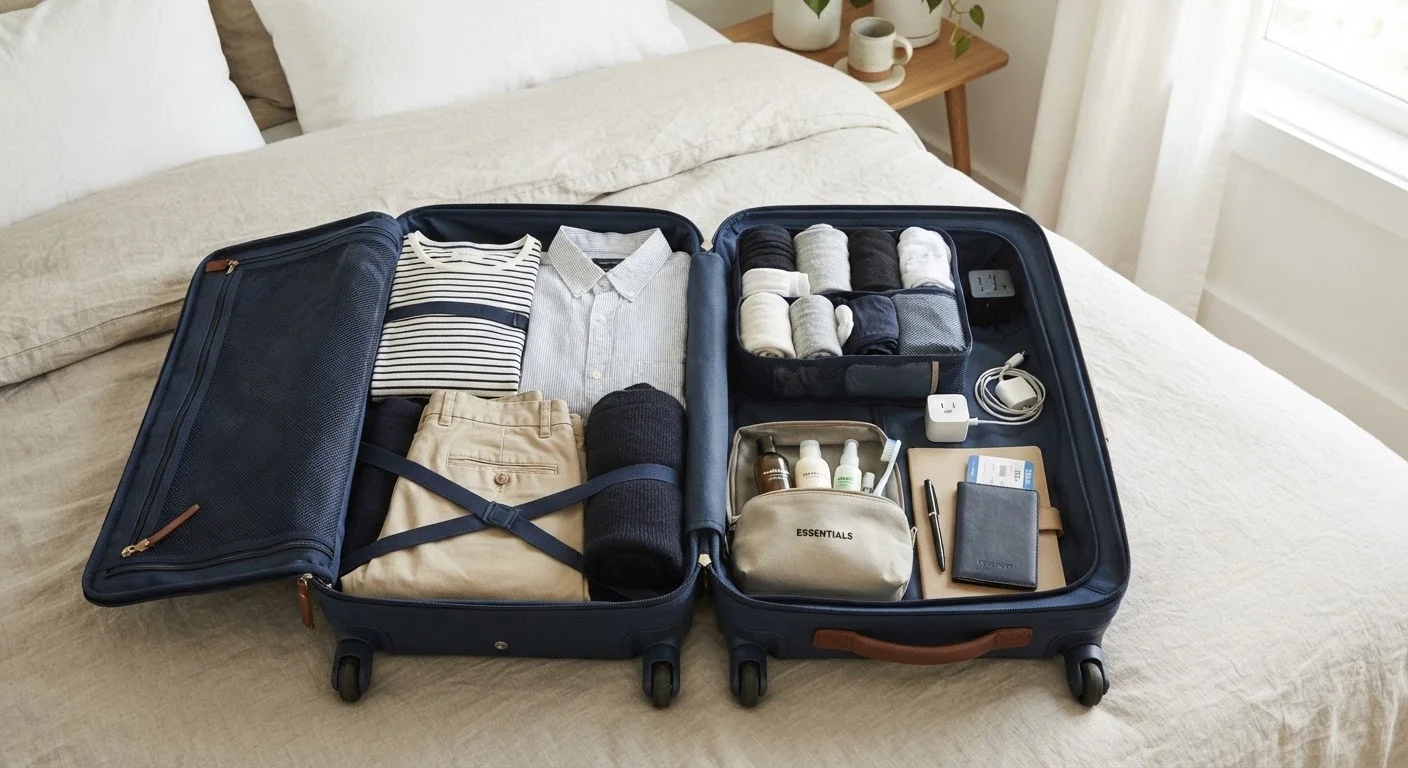
Heaviest items go closest to the wheels (or your back, in a backpack). Items you'll need first — or during transit, like documents and a layer for the plane — stay at the top or in an exterior pocket. Use packing cubes or compression bags to keep categories separated and compressible.
Do a final edit: remove one item per category
Once packed, go back through each category and ask: if I had to leave one of these behind, which would it be? Then leave it behind. This exercise consistently surfaces items that were packed out of habit or anxiety rather than genuine need. Weigh the bag after this step to confirm it meets your allowance.
Don't Rely on Buying Essentials at the Destination
While it's reasonable to leave behind optional items you could purchase if needed, never plan to "just buy it there" for medications, specific medical supplies, or critical documents like printed visas. Availability, language barriers, and time constraints make this a genuinely risky assumption in many destinations.
Where Most Travelers Slip Up
Even with a solid list, a few categories consistently trip people up.
Toiletries and Medications
This is the category where travelers most often either overpack (bringing full-size products they'll use once) or dangerously underpack (forgetting a prescription). Decant products into travel-size containers, but never leave behind any medication you take regularly. Before departure, confirm your pre-departure essentials — including health items — are fully accounted for.
Clothing for "Just in Case"
The single biggest source of bag bloat. A formal outfit for a dinner that may not happen, shoes for hiking you might try — these phantom scenarios add real weight. If an item only justifies itself with the word "maybe," leave it.
The One-In, One-Out Test for Clothing
Before adding any clothing item to the bag, ask what specific activity or day it serves. If it overlaps with something already on the list, choose the more versatile of the two and remove the other. This single habit prevents the "just in case" spiral that accounts for most overpacking.
Luggage Format Itself
Your choice of carry-on versus checked bag shapes every decision downstream. Carry-on vs. checked luggage trade-offs go well beyond bag fees — trip length, destination, and travel style all factor in. If you're heading on a cruise, the calculus shifts again; packing for a cruise involves specific constraints most general guides miss.