

Key Takeaways
Why Flight Disruptions Feel Worse Than They Need To
Flight delays and cancellations affect millions of travelers every year. The frustration is real — missed connections, ruined itineraries, unexpected overnight stays. But a large part of what makes these situations feel so overwhelming is simply not knowing what to do next or what you're actually entitled to ask for.
Most travelers either accept whatever the airline offers without question, or escalate in ways that burn goodwill and rarely produce better outcomes. The middle path — knowing your general rights, staying organized, and making requests calmly — consistently produces the best results. This guide walks you through that path, step by step.
Preparation before your trip goes a long way toward reducing the damage when things go wrong. See our pre-trip checklist for the logistics worth confirming before you leave home, including travel insurance and payment method details that become critical during disruptions.
What you will need
What to Do When a Flight Gets Disrupted
The steps below apply whether you're dealing with a short delay, a multi-hour grounding, or an outright cancellation. Follow them in order — acting quickly at the start gives you more options throughout.
Airline mobile app
Receive real-time flight status alerts, rebook flights, and access digital boarding passes without waiting in line.
Travel insurance policy documents
Reference coverage details for trip interruption, delay reimbursement, and missed connection claims.
Credit card travel benefits summary
Identify whether your card offers trip delay or cancellation reimbursement that supplements airline compensation.
Pen and paper or note-taking app
Log flight numbers, agent names, times, and any verbal commitments made by airline staff.
Get the facts before reacting
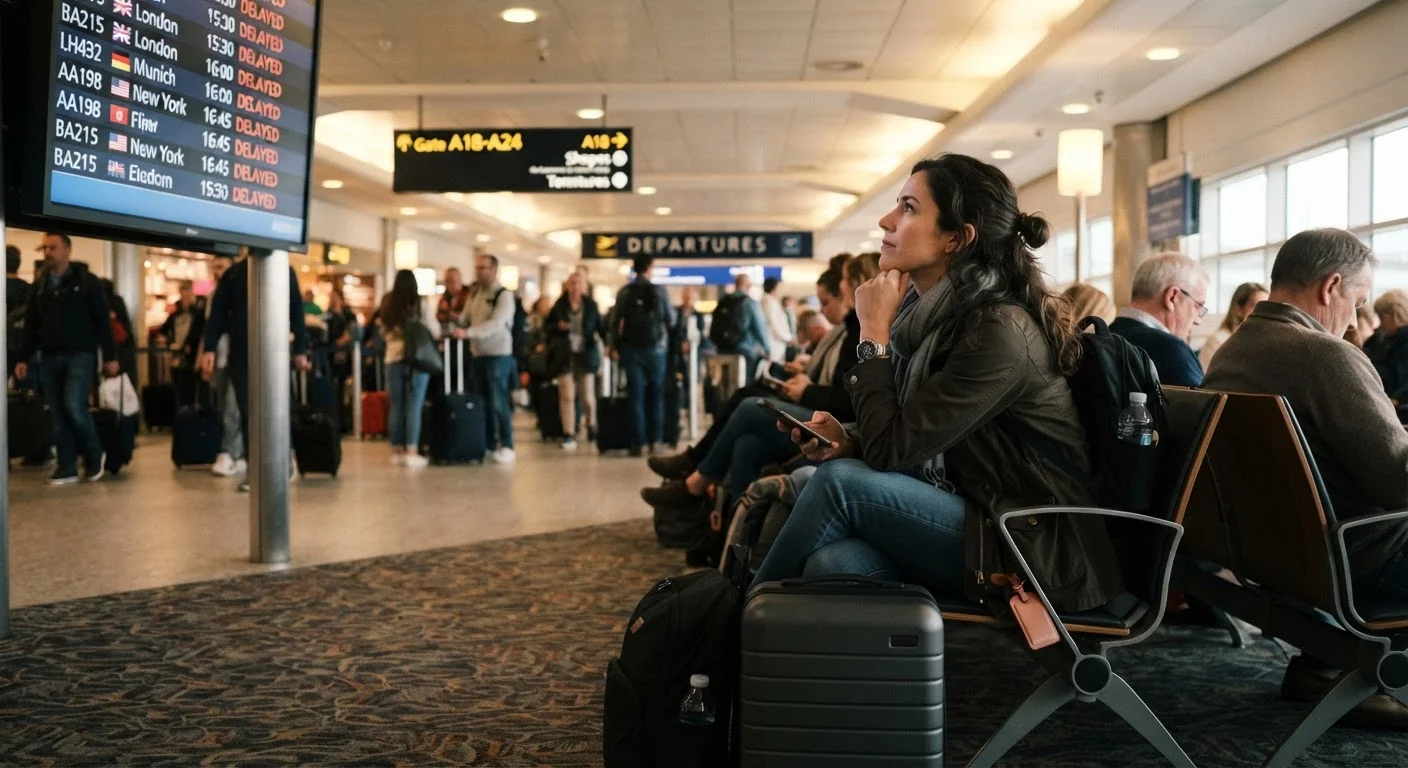
As soon as you notice a delay or cancellation, open the airline's app or check the departure board for the official status. Announcements at the gate are often delayed relative to what the airline's system already shows. Knowing the confirmed reason — mechanical, weather, crew availability — matters because it affects what the airline is and isn't required to offer you.
Start documenting immediately
Take screenshots of the disruption notice, the departure board, and any messages the airline sends. Note the time, your flight number, and the stated reason for the delay. If you speak with a gate agent, write down their name and what they tell you. This documentation is essential if you later file a claim with your travel insurer or a credit card provider, or submit a complaint to the U.S. Department of Transportation.
Understand what the airline owes you
U.S. passenger protections are more limited than those in some other countries. For delays, airlines are generally only required to refund your ticket if you choose not to travel — they are not required by federal law to pay for meals, hotels, or alternate transportation in most delay scenarios. However, many airlines publish customer service commitments (sometimes called a Customer Service Plan) that go beyond legal minimums. Look up your airline's specific plan on their website or via the DOT's Airline Customer Service Dashboard.
Pursue rebooking through the right channel
If your flight is cancelled, the airline is required to offer you a full refund to the original payment method if you choose not to travel. If you want to continue your journey, ask for rebooking — prioritizing the airline's own app, phone line, or gate desk over third-party booking platforms. Third-party bookings sometimes require the original agency to authorize changes, which creates delays. Being flexible about routing (connecting through a different hub, for example) often opens more options.
Activate travel insurance or credit card protections
If your delay crosses the threshold specified in your travel insurance policy — commonly four to six hours — you may be eligible to claim reimbursement for meals, accommodation, or alternate transportation. Credit cards with travel benefits often have similar provisions. Keep all receipts for out-of-pocket expenses; insurers and card issuers typically require itemized documentation. File claims promptly after your trip, as most policies have submission deadlines.
File a formal complaint if warranted
If an airline fails to honor its stated commitments or you believe your rights were violated, you can file a complaint with the U.S. Department of Transportation at airconsumer.dot.gov. Airlines are required to acknowledge complaints and respond. For issues involving significant financial loss, consider also contacting your state's consumer protection office. Keep copies of all your documentation when submitting.
Call While You Wait in Line
During widespread disruptions, gate lines can stretch for hours. Call the airline's customer service number simultaneously — you may reach a representative and get rebooked before you even make it to the counter. Some airlines also allow rebooking directly through their mobile app.
Accepting Vouchers May Limit Your Options
If an airline offers a travel voucher as compensation for a significant disruption, accepting it may waive your right to pursue further remedies — including credit card chargebacks or formal complaints. Read any acceptance language carefully before signing or clicking 'accept' on electronic offers.
Know What Airlines Are Required to Provide
In the U.S., airlines are not legally required to compensate passengers for most weather-related delays or cancellations, as these are considered outside the airline's control. What airlines must do varies by situation — including whether the disruption is within their control and what fare type you purchased. Always check the U.S. Department of Transportation's official resources and your airline's Contract of Carriage for the specific rules that apply to your ticket.
If you're traveling with a group, disruptions become more complex — especially when travelers are on different booking records. Our guide to group travel planning covers how to structure bookings to reduce friction when plans change unexpectedly.
Protecting Yourself Before the Next Trip
The best time to prepare for a flight disruption is before you book. Purchasing travel insurance at the time of booking — rather than after — ensures the widest possible coverage window. Choosing to pay with a credit card that includes travel protections adds a second layer at no extra cost. And booking direct with airlines rather than through third-party platforms usually makes rebooking faster and easier.
Experienced travelers treat disruption preparedness as a standard part of trip planning, not an afterthought. For more habits that reduce travel stress across the board, see planning habits consistent travelers rely on. Also consider how unexpected costs during a disruption — hotels, meals, alternate transport — can blow a travel budget; our piece on why travel budgets fall apart mid-trip offers useful preparation strategies.
This article is for general informational purposes only. Passenger rights, airline policies, and insurance terms vary by carrier, ticket type, and jurisdiction. Verify current rules and your specific policy details before travel.