

Key Takeaways
Our Verdict
No single imperial city represents all of Morocco — each captures a different era, mood, and pace. Travelers who want raw medieval immersion should prioritize Fez; those drawn to vivid markets and architecture will gravitate toward Marrakech. Meknes rewards visitors willing to go slightly off the beaten path, while Rabat offers an unexpectedly livable and modern Moroccan capital experience.
| Best for | Recommended |
|---|---|
| First-time visitors who want dramatic atmosphere and easy logistics | Marrakech |
| History enthusiasts and those interested in Islamic scholarship | Fez |
| Travelers seeking fewer crowds and an authentic local pace | Meknes |
| Those who want a blend of modernity and history without tourist pressure | Rabat |
Why Morocco Has Four Imperial Cities
Morocco's four imperial cities — Fez, Marrakech, Meknes, and Rabat — each served at different points as the seat of royal power. As dynasties rose and fell over more than a thousand years, rulers chose different cities as their capitals, leaving behind mosques, palaces, medinas, and monuments that still define each place today. Together, they form a kind of living timeline of Moroccan civilization.
Understanding what made each city significant historically helps travelers set realistic expectations. They aren't interchangeable stops on a checklist — each has a distinct personality, pace, and concentration of sights. Knowing the difference before you go makes for a much more intentional trip.
How the Four Cities Compare
The table below summarizes the key differences across the most relevant criteria for travelers planning a visit.
| Fez | Marrakech | Meknes | Rabat | |
|---|---|---|---|---|
| Historical role | Cultural & religious capital | Trade & dynastic capital | 17th-century imperial seat | Modern political capital since 1912 |
| Medina character | Vast, medieval, complex | Vibrant, tourist-heavy | Quiet, authentic, walkable | Compact, approachable |
| Crowd level | High, especially in souks | Very high | Low to moderate | Moderate |
| Key landmark | Al-Qarawiyyin University | Jemaa el-Fna square | Bab Mansour gate | Hassan Tower |
| Best for | History & architecture lovers | First-time visitors | Off-the-beaten-path travelers | Modern-meets-historic experience |
| Day trip options | Middle Atlas villages | Atlas Mountains, Essaouira | Volubilis Roman ruins | Casablanca, coastal towns |
Fez: The Intellectual and Spiritual Capital
Founded in the 9th century, Fez is widely regarded as Morocco's cultural and religious heart. It is home to the University of al-Qarawiyyin, founded in 859 CE and recognized by many historians as one of the world's oldest continuously operating universities. The medina of Fez el-Bali is a UNESCO World Heritage Site and is considered one of the best-preserved medieval urban centers in the world.
Navigating Fez's medina is genuinely labyrinthine — thousands of narrow lanes wind past tanneries, madrasas (Islamic schools), and souks (traditional markets). The famous Chouara Tannery, where leather has been dyed using ancient methods for centuries, is one of the most photographed sights in the country. Fez rewards slow travel and curiosity, but it can feel overwhelming without some preparation.
Navigating Fez's Medina
Fez el-Bali has over 9,000 streets and lanes, many of which don't appear accurately on digital maps. Hiring a licensed local guide for at least your first half-day is a practical investment — it reduces frustration and provides context that signs and apps simply can't offer. Ask your accommodation to recommend a guide vetted by other guests.
Marrakech: Drama, Color, and Accessibility
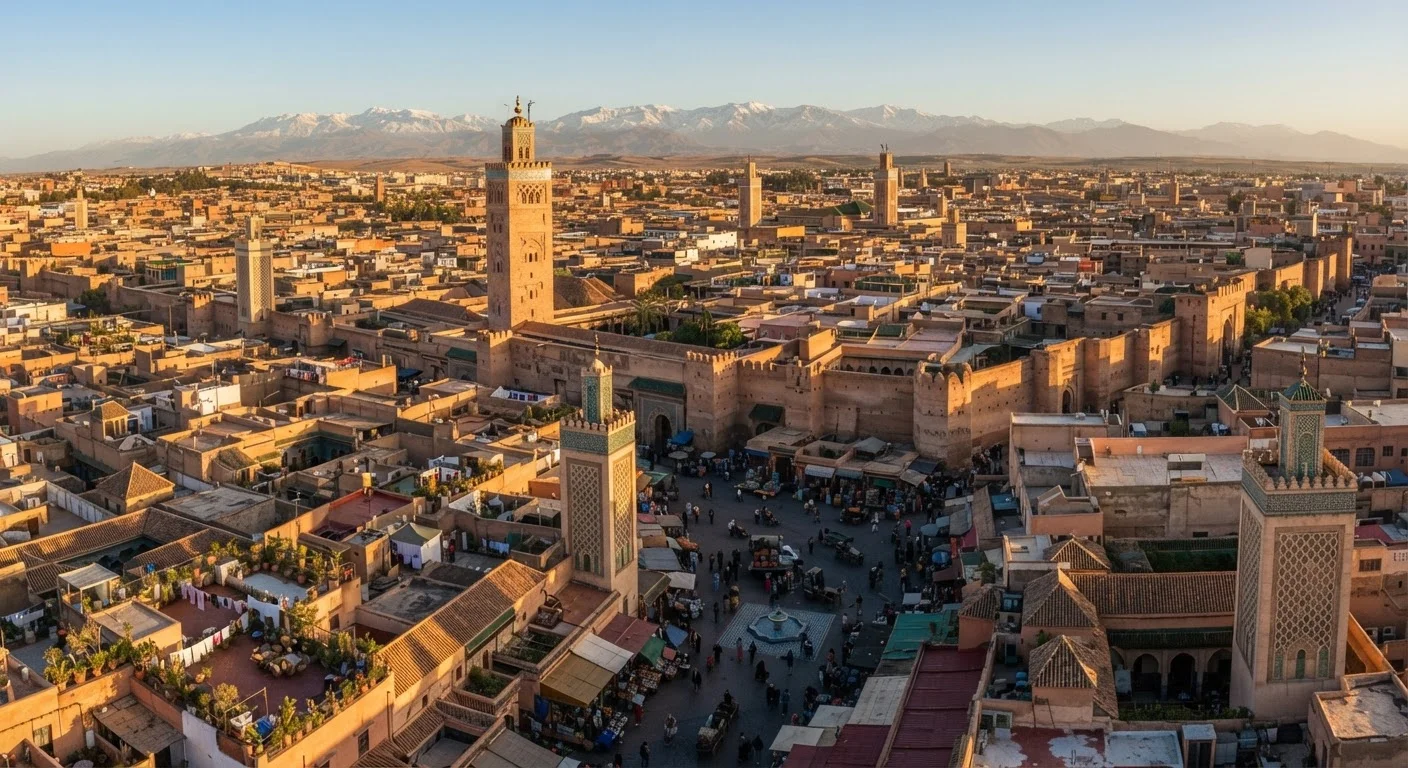
Marrakech is Morocco's most visited city and the one most travelers picture when they imagine the country. Its centerpiece, Jemaa el-Fna square, shifts personality throughout the day — food stalls, street performers, and musicians fill the space by evening. The surrounding medina is dense with riads (traditional courtyard houses), artisan workshops, and dye houses.
The city's appeal is partly its accessibility: direct international flights, a well-developed tourism infrastructure, and a range of accommodations make it a practical entry point. Architecturally, the Koutoubia Mosque and the Bahia Palace are standout landmarks. That said, the heavy tourist traffic means some areas feel more curated than candid. Visitors should venture beyond the main squares to get a truer sense of the city.
Meknes: The Overlooked Imperial Gem
Meknes became Morocco's capital under Sultan Moulay Ismail in the late 17th century, and he built it on an extraordinary scale — vast walls, grand gates, and a sprawling palace complex designed to rival Versailles. The Bab Mansour gate, completed in 1732, remains one of the finest examples of Moroccan monumental architecture.
Despite this heritage, Meknes attracts far fewer tourists than its imperial counterparts. That's actually a draw for many travelers: the medina feels more lived-in, vendors are less aggressive, and the pace is noticeably calmer. The nearby Roman ruins of Volubilis — a short drive away — make Meknes a practical base for day trips as well.
Rabat: The Modern Capital with Ancient Roots
Rabat has been Morocco's political capital since 1912, and it shows — wide boulevards, government ministries, and a well-maintained urban core give it a different feel from the other three cities. But beneath the modern surface, Rabat holds significant historical depth. The Kasbah of the Udayas, the Hassan Tower (an unfinished 12th-century minaret), and the Chellah necropolis all sit within the city.
Rabat's medina is smaller and less intense than Fez's or Marrakech's, making it a good option for travelers who want to experience a traditional medina without the sensory overload. The city also has solid museums, including the Mohammed VI Museum of Modern and Contemporary Art, which provides useful cultural context for understanding Morocco beyond its historical monuments.
9,000+
Streets in Fez el-Bali medina
Fez's medieval medina is one of the world's largest car-free urban areas, according to UNESCO documentation.
859 CE
Founding of al-Qarawiyyin University
Al-Qarawiyyin in Fez is recognized by historians and Guinness World Records as the world's oldest continuously operating university.
3
UNESCO World Heritage Sites among the four cities
Fez, Marrakech, and Meknes each contain UNESCO-listed medinas or monuments; Rabat as a whole received UNESCO status in 2012.