

Key Takeaways
Iceland Beyond the Golden Circle
The Golden Circle is a popular tourist loop near Reykjavík covering Þingvellir National Park, the Geysir geothermal area, and Gullfoss waterfall. "Iceland beyond the Golden Circle" refers to the country's vast and less-visited regions — including the Westfjords, the Eastfjords, the South Coast past Vík, the Snæfellsnes Peninsula, and the remote interior Highlands — that most first-time visitors never see. These areas often require more planning, longer drives, and sometimes seasonal timing, but they offer a very different experience of Iceland's landscape and culture.
Iceland's interior Highlands (Hálendið) are only accessible by vehicle during summer months, typically late June through early September, as many F-roads (mountain roads) remain closed due to snow and dangerous river crossings the rest of the year.
Why the Golden Circle Leaves So Much Unseen
Iceland's Golden Circle has earned its popularity for good reason — Þingvellir, Geysir, and Gullfoss deliver genuine spectacle within an easy day's drive of Reykjavík. But the circuit covers a relatively small pocket of southwest Iceland. The country stretches across roughly 40,000 square miles, and the regions beyond that loop include coastal fjords, volcanic highlands, remote fishing villages, and landscapes that look nothing like the well-photographed tourist trail.
For first-time visitors who have only a week and stick to the Golden Circle and South Coast, that's a perfectly valid trip. But travelers who want to understand what Iceland actually is — geographically and culturally — often leave having seen only one chapter of a much longer story. Understanding what's out there helps you decide how much time to invest and what kind of traveler Iceland calls for.
Iceland is also one of those places that genuinely rewards pre-trip research. As we note in our piece on destinations that reward careful research, some countries have logistical layers — road classifications, seasonal closures, permit requirements — that make planning essential rather than optional. Iceland is firmly in that category.
The Westfjords: Iceland's Least-Visited Corner
The Westfjords (Vestfirðir) jut out from northwest Iceland like a deeply indented hand. The region accounts for roughly 22% of Iceland's coastline but receives a fraction of overall tourist traffic. Roads here are narrow, often unpaved, and wind around fjord after fjord — which means driving distances translate into significantly longer travel times than a map suggests.
What the Westfjords offer is difficult to replicate elsewhere: near-total quiet, dramatic bird cliffs at Látrabjarg (one of the largest seabird cliffs in Europe), the colorful village of Ísafjörður, and thermal pools at Drangsnes where you can soak overlooking the fjord. This is Iceland for people who find the Golden Circle crowd uncomfortable and want something slower and more immersive.
Plan the Westfjords as Its Own Leg
Because of the fjord geography, distances on a map don't reflect actual drive times in the Westfjords. A destination that looks 30 miles away may take 90 minutes due to winding coastal roads. Build generous buffer into any daily driving plan and consider basing yourself in Ísafjörður for at least two nights.
Getting here requires either a domestic flight to Ísafjörður or a long drive — typically 5–6 hours from Reykjavík, not counting fjord road delays. The Westfjords are best treated as a dedicated leg of a longer trip, not a day excursion.
The Highlands: Accessible Only on Nature's Schedule
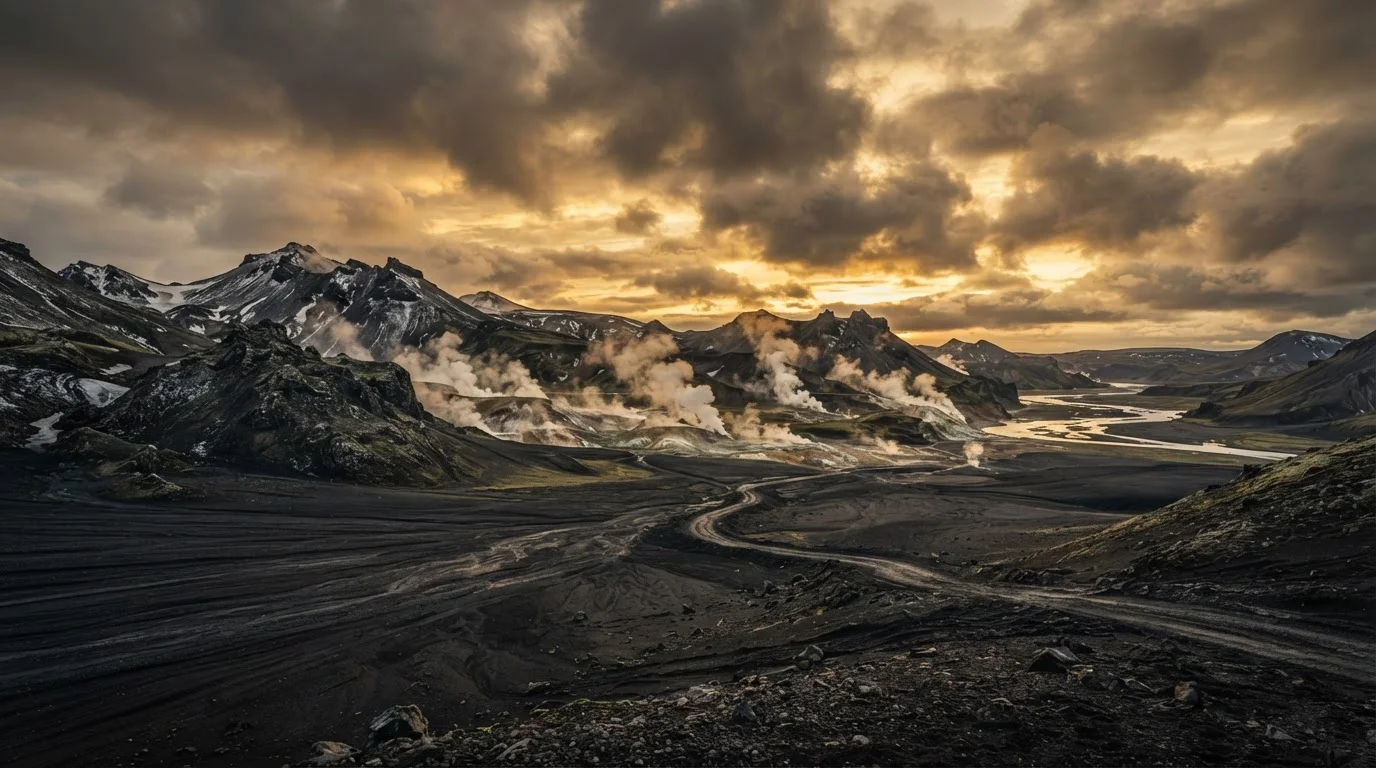
Iceland's interior — known as Hálendið, or the Highlands — is one of Europe's genuine wildernesses. Virtually uninhabited, the region includes lava fields, obsidian plains, rhyolite mountains in vivid orange and green, and the famous routes of Landmannalaugar and Þórsmörk. It looks, in places, more like another planet than a European country.
The catch is access. Highland F-roads are only open during summer, typically from late June to early September, and even then conditions vary year to year. Only 4WD vehicles with high clearance are permitted, and several routes involve unbridged river crossings that require experience and careful judgment. Verify current road conditions through the Icelandic Road and Coastal Administration (Vegagerðin) before any Highland journey — conditions can change overnight.
~40,000
Square miles of total Icelandic territory
Iceland's total land area, illustrating how much landscape exists beyond the compact Golden Circle tourist loop.
~6–8 weeks
Window when Highland F-roads are typically open
Most Highland routes open in late June and close again by early to mid-September, depending on snowpack and conditions that year.
7–10 days
Minimum recommended time for the full Ring Road
Travel advisors and experienced Iceland visitors generally consider 7–10 days a minimum for driving Route 1 at a realistic pace with meaningful stops.
The Snæfellsnes Peninsula and the East: Two Different Icelands
West of Reykjavík, the Snæfellsnes Peninsula offers an accessible alternative for travelers short on time. The peninsula's centerpiece is Snæfellsjökull glacier — the volcano Jules Verne placed at the entrance to the center of the Earth — now a national park. The drive from the capital takes about two hours, and the peninsula delivers glaciers, lava tubes, black sand beaches, and fishing villages in a compact package that doesn't require F-road vehicles.
The Eastfjords are a completely different pace. Quieter even than the Westfjords in terms of tourist infrastructure, the east is where you find Iceland's reindeer herds, remote farm communities, and the town of Seyðisfjörður — a ferry port with an unexpectedly vibrant arts scene. Travelers who complete the full Ring Road almost always cite the east as where they finally felt like they'd escaped the tourist circuit entirely.
If you're preparing for your first significant international trip and Iceland is on your list, our guide for first-time international travelers covers the logistical basics — from documentation to jet lag — that apply regardless of where you're headed.
Iceland's Weather Changes Quickly
Conditions across all of Iceland — including the Snæfellsnes Peninsula and Eastfjords — can shift dramatically within hours. Even well-maintained roads can become hazardous in wind, rain, or sudden snow outside of summer. Always check the Icelandic Meteorological Office forecast (vedur.is) the morning of any long drive, and be prepared to adjust plans.