
Key Takeaways
Our Verdict
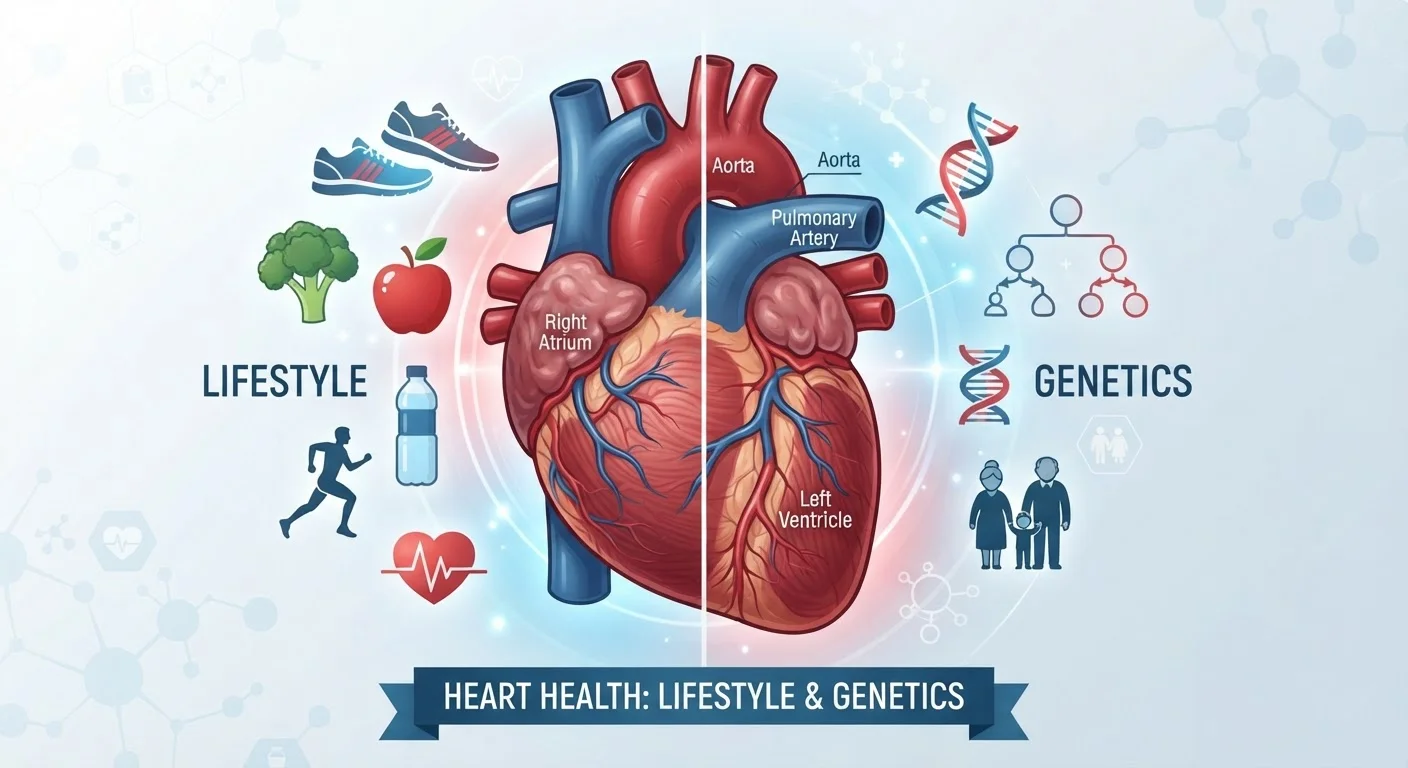
Neither category of risk factor should be ignored. Uncontrollable factors like age and family history set your baseline risk, but modifiable factors — from blood pressure to physical activity — determine how much additional risk you accumulate over time. Understanding both gives you and your doctor the clearest picture for prevention.
| Best for | Recommended |
|---|---|
| Those with a strong family history of heart disease | Focus intensively on modifiable risk factors |
| Younger adults with no obvious symptoms | Establish healthy lifestyle habits early to reduce future risk |
| Anyone managing chronic conditions like diabetes or hypertension | Work closely with a doctor on both controllable and uncontrollable risks |
Why the Distinction Matters
Heart disease remains the leading cause of death in the United States, but it is not inevitable for most people. The key to understanding your personal risk lies in separating what you can actively work on from what you simply inherited. This distinction matters not to create fatalism or false reassurance, but to help you focus energy where it counts and have more productive conversations with your doctor.
Risk factors are conditions or behaviors that increase the likelihood of developing cardiovascular disease. Some are biological realities set before birth. Others emerge from daily habits and health conditions that respond to intervention. Most people carry a mix of both — the goal is to manage the modifiable ones as effectively as possible.
| Modifiable Risk Factors | Non-Modifiable Risk Factors | |
|---|---|---|
| Examples | Blood pressure, cholesterol, smoking, diet, activity level | Age, genetics, biological sex, family history |
| Can be changed or treated? | Yes — through lifestyle or medication | No — cannot be altered |
| Impact on overall risk | High — cumulative changes produce significant risk reduction | High — sets baseline risk level |
| Response to lifestyle changes | Measurable improvement possible | Does not change, but context informs clinical care |
| Role in clinical screening | Target of most prevention strategies | Used to determine screening intensity and frequency |
Risk Factors You Cannot Change
Age is the single strongest non-modifiable risk factor. Cardiovascular risk rises steadily as we get older because arteries gradually stiffen and accumulate plaque over decades. Men face elevated risk beginning around age 45; women's risk increases significantly after menopause, typically around age 55, partly because estrogen had offered some protective effect.
Biological sex and hormonal biology also play a role. Men tend to develop heart disease earlier in life on average, while women often experience it later but may present with different or subtler symptoms — a distinction worth raising explicitly with your physician.
Family history and genetics are among the most significant inherited factors. If a close blood relative — parent, sibling — had a heart attack or was diagnosed with heart disease before age 55 (men) or 65 (women), your baseline risk is meaningfully higher. Certain inherited conditions, such as familial hypercholesterolemia (a genetic disorder causing very high LDL cholesterol levels), can accelerate cardiovascular disease regardless of lifestyle.
Race and ethnicity are also associated with varying rates of heart disease and related conditions like hypertension, reflecting a complex interaction of genetics, social determinants of health, and access to care. These patterns are documented in public health research but are not destiny.
Risk Factors Within Your Influence
The encouraging reality is that many of the most impactful heart disease risk factors are modifiable. Research consistently shows that lifestyle and medical interventions can reduce cardiovascular risk even among people with significant inherited disadvantages.
High blood pressure (hypertension) quietly damages artery walls over years. It is largely controllable through diet changes (particularly reducing sodium), regular physical activity, maintaining a healthy weight, limiting alcohol, and when necessary, medication prescribed by a physician.
High LDL cholesterol contributes to arterial plaque buildup. Dietary adjustments — reducing saturated and trans fats, increasing fiber — can help, as can medications like statins when a doctor determines they are appropriate.
Smoking is one of the most powerful and direct cardiovascular risk factors. Quitting at any age produces measurable improvements in heart health, with risk declining progressively after cessation.
Physical inactivity is independently associated with elevated cardiovascular risk. Even moderate, consistent movement makes a difference. Walking regularly is one of the most accessible and well-studied starting points, though combining cardio and strength training offers broader cardiovascular and metabolic benefits.
Type 2 diabetes and insulin resistance significantly raise cardiovascular risk but are substantially modifiable through diet, activity, weight management, and medical treatment. Obesity, chronic stress, and poor sleep are also recognized contributors that respond to behavioral and medical intervention.
Start With What You Know
Ask your doctor to review your complete cardiovascular risk profile at your next visit, including blood pressure, fasting cholesterol, and blood glucose. Knowing your numbers gives you a concrete baseline. Even small, sustained improvements in modifiable risk factors can compound into meaningful long-term protection.
Putting It All Together
Having uncontrollable risk factors is not a reason for despair — it is a reason to be more intentional about the factors you can address. Research shows that people with high genetic risk who adopt healthy lifestyle habits still achieve meaningfully lower cardiovascular event rates than those who do not.
The most effective approach combines self-awareness about your personal risk profile with regular clinical assessment. Routine screenings — blood pressure checks, lipid panels, blood glucose tests — give you and your provider the data needed to intervene early, long before symptoms appear.
~80%
Premature heart disease considered preventable
The World Health Organization estimates that a large majority of premature cardiovascular deaths could be prevented through addressing modifiable risk factors.
2x
Higher risk with positive family history
Having a first-degree relative with early-onset heart disease approximately doubles an individual's cardiovascular risk, according to cardiovascular epidemiology literature.
This article is for general informational and educational purposes only and does not constitute medical advice. Always consult a qualified healthcare professional for guidance tailored to your individual health circumstances, symptoms, or medical history.