

Key Takeaways
Flexibility vs. Mobility
Flexibility refers to the ability of a muscle or group of muscles to lengthen passively — in other words, how far a muscle can be stretched. Mobility refers to the ability of a joint to move actively through its full range of motion under your own control. Stretching is a practice — a set of techniques used to improve one or both of these qualities.
In physical therapy and exercise science, mobility is often considered the more functionally relevant of the two, because it reflects what the body can actually do during movement, not just what it can tolerate when assisted.
Three Terms, Three Distinct Concepts
Walk into any gym, scroll through a fitness app, or skim a wellness article and you'll encounter flexibility, mobility, and stretching used almost interchangeably. They're not. Treating them as synonyms leads to lopsided training habits — and sometimes frustration when effort doesn't produce the results you expected.
Here's the clearest way to keep them straight:
- Flexibility is a property of soft tissue — specifically, how much a muscle or tendon can lengthen when a force is applied to it. It's largely passive: someone else could stretch your hamstring while you lie still.
- Mobility is a property of joints and the neuromuscular system. It describes how far and how well a joint can move under your own active control. It combines flexibility with strength, coordination, and motor control.
- Stretching is a practice — the techniques and drills you use to work on one or both of the above.
Just as aerobic and anaerobic exercise describe meaningfully different physiological processes despite often being lumped together, these three terms describe distinct — though related — aspects of physical function.
Flexibility Without Mobility Is Common
It's entirely possible to be highly flexible in a passive sense — a yoga instructor can move your limbs into impressive positions — while lacking the active joint control needed for functional tasks like a deep squat or an overhead press. This is why physical therapists and coaches often prioritize active mobility assessments over passive flexibility tests when evaluating movement readiness.
Why the Distinction Matters in Practice
A person can have excellent passive flexibility — they can be pushed into a deep stretch — but struggle to reach that same position under their own power. A gymnast may have extreme flexibility in the hips, yet an athlete performing Olympic lifts needs mobile hips: the capacity to actively control that range while under load.
This is why focusing only on stretching can leave gaps. Passive flexibility work (holding a stretch for 30–60 seconds) lengthens tissue and can expand passive range of motion. But active mobility work — moving joints deliberately through their full range, often against light resistance — trains the nervous system to own and control that range.
~30%
Decline in joint flexibility per decade after 30
Research in exercise physiology consistently shows that passive range of motion decreases with age, particularly in sedentary individuals, though regular activity significantly slows the decline.
2–4x/week
Stretching frequency for measurable flexibility gains
According to guidance from the American College of Sports Medicine, stretching at least two to four times per week is associated with meaningful improvements in range of motion over time.
For everyday Americans, this distinction is most relevant when it comes to movement quality during daily activities: bending to pick something up, reaching overhead, sitting comfortably for long periods, or walking without compensating through the lower back. Mobility limitations in the hips and thoracic spine (the mid-back), for example, are frequently linked to how the rest of the body absorbs load and distributes movement.
Types of Stretching and What Each Does
Not all stretching is the same, and choosing the right type for your context matters.
Static Stretching
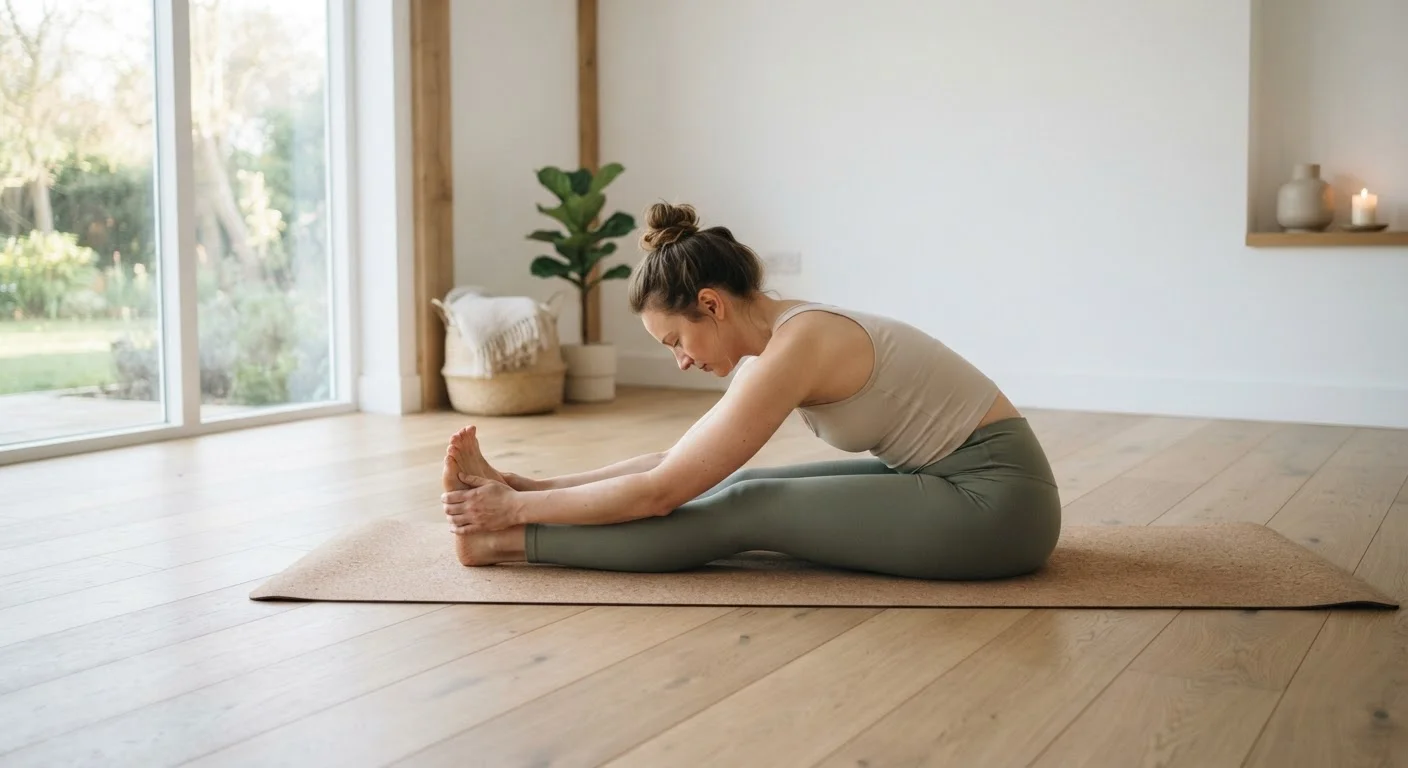
A position is held without movement, typically for 20–60 seconds. This is what most people picture when they think of stretching. It's effective for increasing passive range of motion, especially when practiced consistently after exercise or during dedicated flexibility sessions.
Dynamic Stretching
Controlled movements that take a joint or muscle through its range repeatedly — leg swings, arm circles, hip circles. Because these involve active muscle engagement, they're well-suited as part of a warm-up before physical activity.
Active Isolated Stretching and PNF
Proprioceptive Neuromuscular Facilitation (PNF) stretching — which involves cycles of contraction and relaxation — and active isolated stretching techniques are used in rehabilitation and athletic training to produce faster range-of-motion gains. These are typically guided by a physical therapist or certified trainer.
Best Time for Static Stretching
Save long-hold static stretches for after your workout or for standalone sessions — not immediately before intense exercise. Post-exercise muscles are warmer, more pliable, and neurologically less guarded, making static stretching both safer and more effective at that point in your routine.
The key takeaway: stretching is a tool, not a goal in itself. The goal is usually improved flexibility, improved mobility, or both — and different techniques serve different purposes.
Building a Balanced Approach
A sustainable movement practice for most adults benefits from addressing both passive flexibility and active mobility. A general framework that many fitness professionals recommend includes:
- Dynamic warm-up before exercise — active movements that rehearse the ranges you'll use.
- Strength training through full range of motion — exercises like deep squats and Romanian deadlifts, when performed correctly, double as mobility work.
- Static stretching post-workout or in dedicated sessions — when muscles are warm and the nervous system is less guarded.
- Targeted mobility drills for areas of known restriction — commonly the hips, ankles, thoracic spine, and shoulders.
Age, activity level, and individual anatomy all influence where someone starts and what they most need. Restrictions that have been present for years take longer to shift than recent ones. If you have a pre-existing injury, chronic condition, or significant pain with movement, a physical therapist or qualified movement specialist is the right person to guide a program — not a generic routine.
This article is for general informational purposes only and does not constitute medical or professional fitness advice. Always consult a qualified healthcare or fitness professional before beginning a new exercise or stretching program, particularly if you have existing injuries, chronic conditions, or movement limitations.