

Key Takeaways
Why Coverage Falls Behind Your Life
Insurance is easy to buy and easy to forget. Most people set it up when they first need it — signing onto an employer's health plan, insuring a new car, getting renters coverage for a first apartment — and then let it run on autopilot. That approach works fine until life changes. And life always changes. When it does, the coverage you hold may no longer reflect what you own, who depends on you, or what it would actually cost to recover from a loss.
The problem isn't just being underinsured. You can just as easily end up paying for coverage that no longer fits your situation: limits that are too low on a home you've renovated, a policy covering a car you sold, or a beneficiary you'd update if you thought about it. A mismatch between your policy and your actual life doesn't surface until something goes wrong — and by then, it's too late to fix retroactively.
Before diving into specific triggers, it helps to understand the full landscape. If you're not sure which policies most households carry and why, a rundown of the main insurance types gives you that foundation. And if you'd rather build a year-round review habit, a structured annual coverage check-up can help you stay ahead of gaps before they become problems.
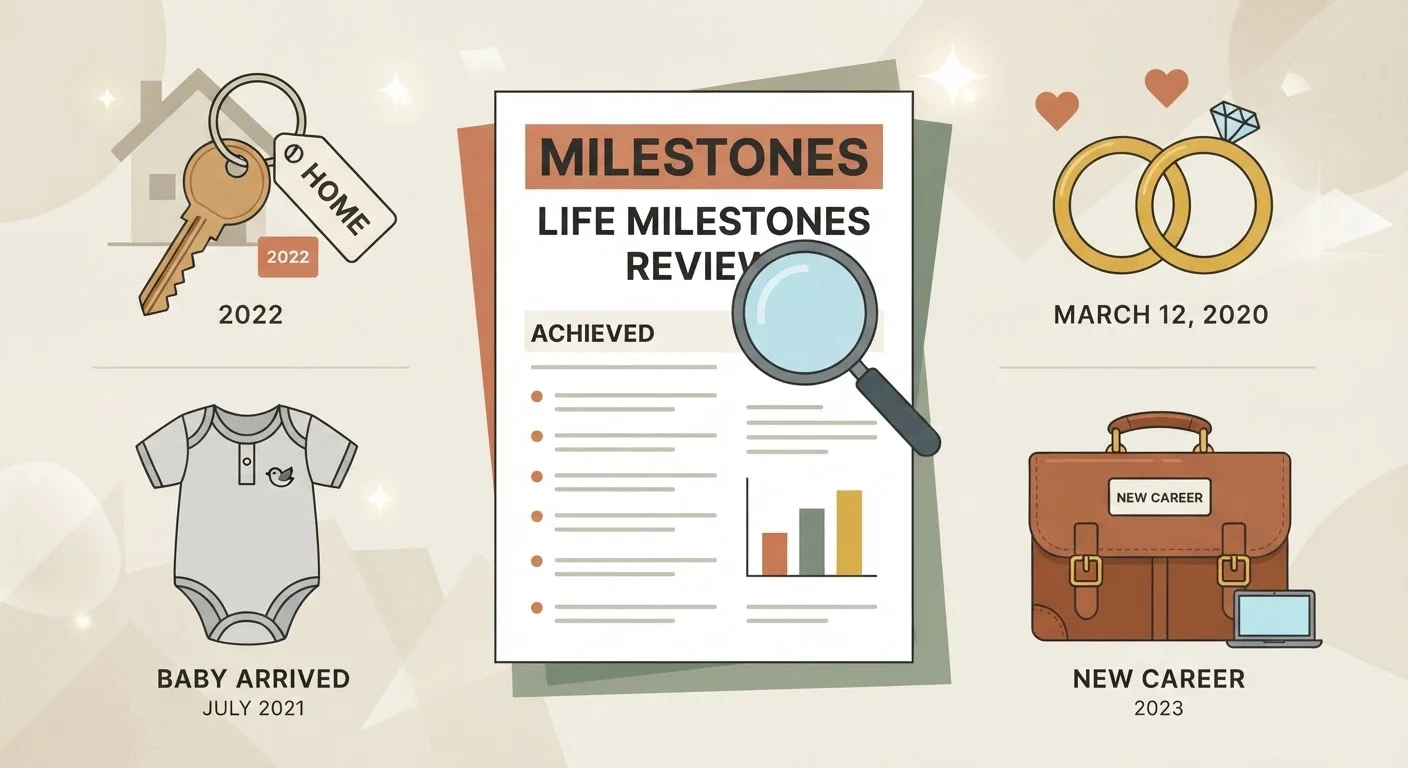
The events below are the most common reasons coverage falls out of sync with real life — and the ones most likely to be pushed aside when you're in the middle of everything else a major milestone brings.
Check Your Enrollment Window First
Many qualifying life events — marriage, birth, adoption, job loss — open a Special Enrollment Period (SEP) that lets you make coverage changes outside of standard open enrollment. These windows are typically 30 to 60 days, depending on the insurer and policy type. Contact your insurer or HR department as soon as a qualifying event occurs to confirm the deadline and what documentation you'll need to provide.
Getting Married or Entering a Domestic Partnership
Marriage changes nearly every insurance category at once. On the health side, you can add a spouse to your employer-sponsored plan during the special enrollment period that follows the event — or compare whose workplace plan offers better coverage or lower out-of-pocket costs. If both partners have employer coverage, running those numbers side by side before making any change is worth the time.
Auto insurance often shifts when two households combine under one address, though the impact on premiums depends on both drivers' histories. Review renters or homeowners coverage to make sure combined belongings are reflected in the policy. Most importantly, update beneficiary designations on life insurance policies, retirement accounts, and any savings instrument with a named beneficiary — these don't change automatically when you marry, and a beneficiary designation is legally binding regardless of your wishes elsewhere.
Beneficiary designations don't update automatically when you marry — you have to do it yourself.
Having or Adopting a Child
A newborn or newly adopted child must be added to health insurance quickly. Most plans — including employer group plans and ACA marketplace policies — require you to enroll a new dependent within 30 days of birth or adoption. Miss that window and you'll typically have to wait for open enrollment, leaving a gap in the interim.
This is also the time to take life insurance seriously if you haven't already. When someone depends on your income, the financial consequence of losing it changes completely. Disability insurance becomes more important for the same reason: an illness or injury that keeps you from working for months now affects more than just your own finances. If your current life insurance coverage is thin or nonexistent, a new dependent is a clear reason to address it.
A new child creates financial dependency that makes life and disability insurance far more important.
Buying a Home
Mortgage lenders require homeowners insurance before closing — that's the practical floor. But required coverage and adequate coverage aren't the same thing. Standard homeowners policies typically cover the structure, personal belongings, and personal liability, but exclude specific events. Flood damage requires a separate flood insurance policy, and earthquake coverage is also typically excluded from standard policies. Whether those add-ons make sense depends on where you live and what risks are realistic in your area.
Pay close attention to your dwelling coverage limit. It should reflect the cost to rebuild your home, not its current market value — and in many areas, construction costs have risen enough that an older policy limit may leave you significantly short. If you're renting rather than buying, a move still warrants updating your renters insurance to reflect your new address and any changes to your belongings.
Dwelling coverage should reflect rebuild costs, not market value — those two numbers often differ significantly.
Changing Jobs or Losing Employer Benefits
When you leave a job — whether voluntarily, through layoff, or at retirement — employer-sponsored health insurance typically ends on your last day or the last day of that month. From there, you generally have options: COBRA continuation coverage (which lets you keep your former plan but requires you to pay the full premium plus an administrative fee), coverage through a spouse's plan, or a marketplace plan. Each option has its own enrollment deadline, so acting promptly matters.
Group life and disability insurance through an employer usually don't follow you when you leave. If you relied on those benefits as your main coverage, you may need individual policies to replace them. A new job may offer comparable or better benefits — but comparing coverage levels before or during a transition is worthwhile, particularly for health, life, and disability.
Group life and disability insurance typically end when you leave a job — don't assume you're still covered.
Getting Divorced or Separating
Divorce creates a checklist of insurance tasks that are easy to overlook when you're managing everything else. Remove a former spouse from any policy where they're listed as a covered party or beneficiary — this includes health, auto, homeowners, and life insurance. On life insurance especially, a beneficiary designation is legally binding and overrides what a will says. If a former spouse is still listed and something happens to you, the designation stands regardless of your intent.
Auto policies often need to be separated and reissued. If both parties were on a joint homeowners policy and the property is being sold or transferred, coverage must be reassigned to match the new ownership. Your own coverage amounts may also need revisiting: a single-income household typically has different life and disability insurance needs than a dual-income one.
A life insurance beneficiary designation overrides your will — update it as soon as a divorce is finalized.
A Child Aging Out of Your Health Plan
Under the Affordable Care Act (ACA), adult children can remain on a parent's health insurance until they turn 26. That birthday is a hard cutoff for most plans, and the transition doesn't happen automatically — your insurer will remove the dependent, but the responsibility for securing replacement coverage falls on the young adult, and practically speaking, often on whichever parent is tracking the timeline.
As the milestone approaches, review available options together: employer-sponsored coverage through a new job, an ACA marketplace plan, or Medicaid depending on income. A gap in health coverage — even a brief one — can be costly if something unexpected happens. For more on what happens when a policy lapses and why getting back on track isn't always straightforward, see what a coverage lapse actually means.
The ACA's age-26 cutoff is a hard deadline — coverage doesn't automatically transfer to the young adult.
What to Do After a Triggering Event
The ordinary milestones of adult life — marriage, a new home, a new child, a career change — are exactly when coverage needs the most attention and often gets the least. The cost of that gap shows up not when you miss the review, but when you file a claim and find out what wasn't covered.
Once you know what might need updating, the next step is understanding what you actually have. Our guide on how to read an insurance policy without getting lost breaks down where to find key details in a typical policy document — the sections explaining coverage limits, exclusions, and conditions. If a life event has you thinking about life insurance seriously for the first time, comparing term and whole life options lays out how they differ in cost, structure, and who each suits best.
It's also worth understanding what your current policies don't cover. Common coverage assumptions often don't hold up, and a major life change is a natural moment to check yours. If you've ever let a policy lapse during a transition, what happens when coverage lapses explains why getting back on track isn't always as simple as it sounds.
For any decisions about changing, adding, or canceling coverage, a licensed insurance agent or financial adviser can give guidance specific to your situation.
Coverage Doesn't Update Itself
Notifying your employer or HR department about a life change is not the same as updating your insurance policy. Each insurer has its own process for adding dependents, changing beneficiaries, or adjusting coverage levels. If you've had a significant life event in the past year and aren't certain your policy reflects it, contact your insurer directly to verify — don't assume the paperwork was handled automatically.
This article is for general informational purposes only and does not constitute personalized insurance, financial, or legal advice. Coverage terms, eligibility, and regulations vary by provider and state. Consult a licensed insurance agent or financial adviser for guidance specific to your circumstances.