

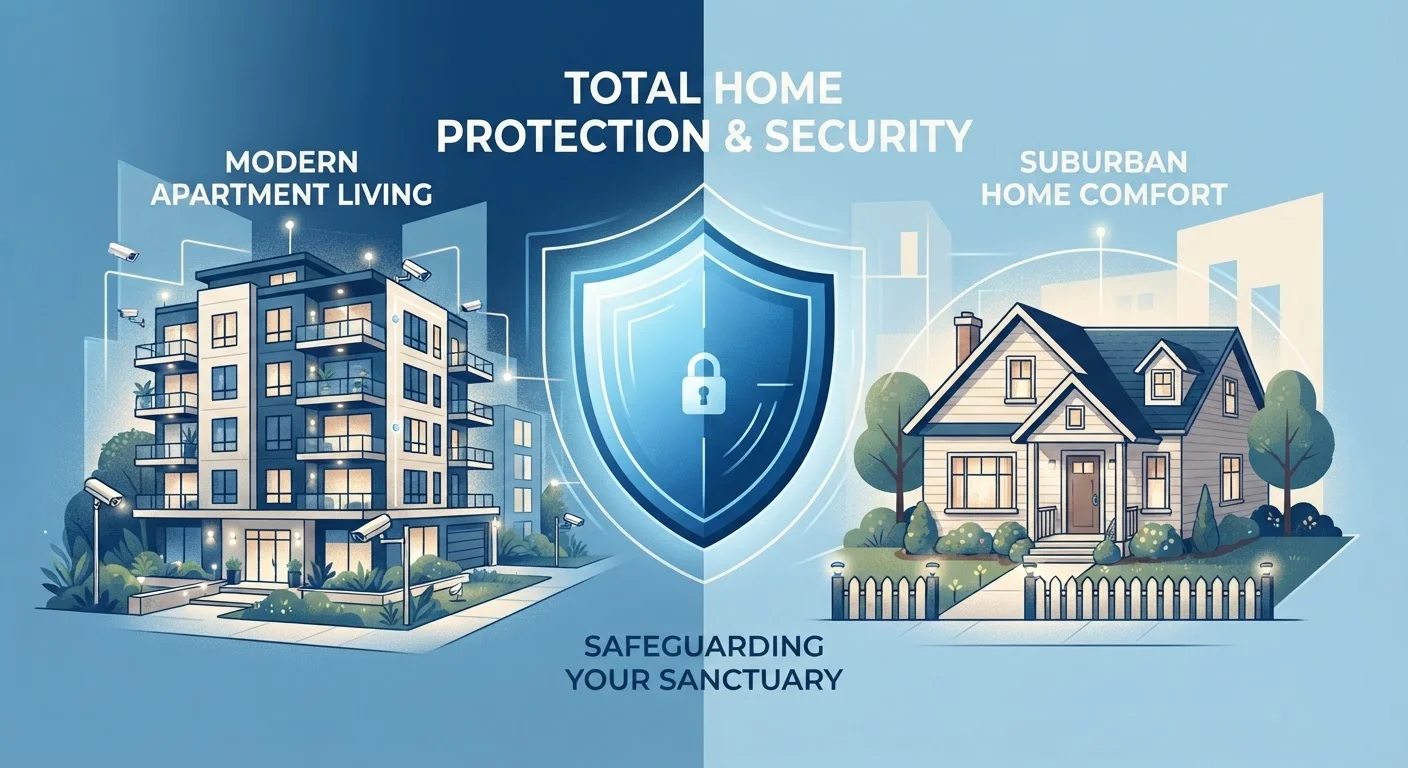
Key Takeaways
Option A
Renter's Insurance
Affordable protection for people who lease their home.
Best for: Tenants who want to protect their belongings and personal liability without covering the building itself.
Option B
Homeowner's Insurance
Comprehensive coverage for those who own the property they live in.
Best for: Property owners who need to protect both the physical structure and what's inside it.
If you rent an apartment or house
Renter's Insurance
Your landlord's policy won't replace your furniture, electronics, or clothing if something goes wrong. Renter's insurance fills that gap at a relatively low cost.
If you own your home
Homeowner's Insurance
You're responsible for repairing or rebuilding the structure itself. Homeowner's insurance protects that investment along with your personal property and liability.
If you're buying a home with a mortgage
Homeowner's Insurance
Most mortgage lenders require homeowner's insurance as a condition of the loan, so this choice is typically not optional.
If you're a first-time renter on a tight budget
Renter's Insurance
Renter's insurance is one of the lowest-cost insurance products available and still provides meaningful protection for your belongings and liability exposure.
What Each Policy Actually Covers
The single biggest difference between these two policies comes down to one question: do you own the building you live in?
Renter's insurance is designed for tenants. It covers three main things: your personal belongings (furniture, clothes, electronics), personal liability if someone is injured in your home or you accidentally damage someone else's property, and additional living expenses if your unit becomes uninhabitable due to a covered event like a fire.
What renter's insurance does not cover is the physical structure — the walls, roof, plumbing, and electrical systems. That's the landlord's responsibility under their own property policy. A common misconception is that the landlord's insurance covers renters, too. It doesn't. If your apartment floods due to a burst pipe in another unit and ruins your laptop and clothing, your landlord's insurer has no obligation to replace your items.
Homeowner's insurance bundles several protections together. It covers the dwelling itself (the structure), other structures on the property like a garage or fence, your personal property inside the home, liability, and additional living expenses if you're temporarily displaced. Because the homeowner is responsible for the physical asset, coverage is broader — and premiums reflect that.
Both policies typically include personal liability coverage, which helps pay for legal and medical costs if someone is hurt on your property or you're held responsible for damage elsewhere. For a deeper look at how liability works across different policy types, see how liability coverage works across policies.
| Criterion | Renter's Insurance | Homeowner's Insurance |
|---|---|---|
| Who it's for | Tenants leasing a property | People who own their home |
| Covers the building structure | No | Yes |
| Covers personal belongings | Yes | Yes |
| Personal liability coverage | Yes | Yes |
| Additional living expenses | Yes (if unit is uninhabitable) | Yes (if home is uninhabitable) |
| Flood & earthquake coverage | Not standard — separate policy needed | Not standard — separate policy needed |
| Typical annual cost range | Lower (often under $200/year) | Higher (varies widely by home value) |
| Usually required by a third party | Sometimes (some landlords require it) | Yes (mortgage lenders typically require it) |
Cost, Gaps, and What to Watch For
Renter's insurance tends to be significantly less expensive than homeowner's insurance. The lower premium reflects the narrower scope: you're insuring your possessions and liability, not a physical structure worth hundreds of thousands of dollars.
Homeowner's insurance costs vary considerably depending on the home's value, location, age, and chosen coverage limits. Mortgage lenders typically require it, so most homeowners don't face a choice about whether to carry it — only how much coverage to get.
Both policies share a notable limitation: standard versions generally do not cover flooding or earthquake damage. These perils usually require separate policies or endorsements. This surprises many policyholders. For a fuller look at what insurance often leaves out, common coverage gaps people miss is worth reading before you finalize any policy.
~$180
Average annual renter's insurance premium (U.S.)
According to the Insurance Information Institute, the average renter's insurance policy in the U.S. costs roughly $180 per year, or about $15 per month.
~57%
U.S. renters who carry renter's insurance
Industry surveys have estimated that fewer than 6 in 10 renters carry renter's insurance, leaving a large share of tenant households without personal property protection.
$1,000+
Typical homeowner's insurance annual premium (U.S.)
The Insurance Information Institute has reported that the average U.S. homeowner's insurance premium has exceeded $1,000 annually, though this varies widely by state and home value.
When reviewing either type of policy, pay attention to whether coverage is actual cash value (what your items are worth today, accounting for depreciation) or replacement cost value (what it costs to replace them with similar new items). Replacement cost coverage costs more but pays out more meaningfully after a loss.
For guidance on making sense of policy language and finding the key sections before you sign, reading an insurance policy without getting lost walks through the structure in plain language.
This article provides general information about insurance products for educational purposes only. It is not personalized financial or insurance advice. Coverage terms, exclusions, and premiums vary by provider, location, and individual circumstances. Always read policy documents carefully and consult a licensed insurance agent or financial adviser for guidance specific to your situation.