

Key Takeaways
Fever in Children
A fever is the body's natural response to infection or illness, marked by a temporary rise in body temperature above the normal range. For most children, a temperature of 100.4°F (38°C) or higher — measured rectally — is considered a fever. It is a sign that the immune system is actively working, not a disease itself.
Normal body temperature varies slightly by measurement method: rectal readings tend to run about 0.5–1°F higher than oral readings, and axillary (armpit) readings tend to run lower. Always note the method used when reporting a temperature to a healthcare provider.
What a Fever Actually Tells You
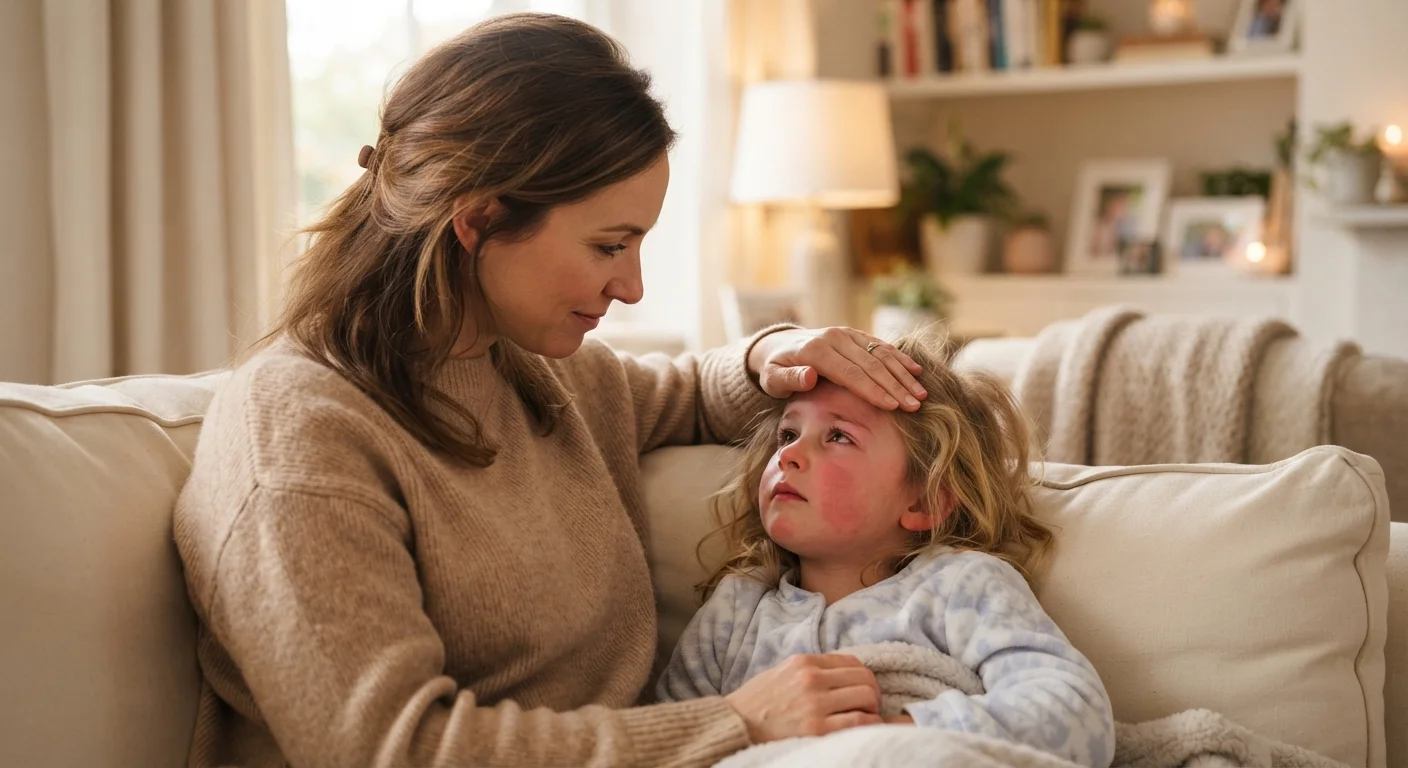
When your child's forehead feels warm and the thermometer confirms your suspicion, it is easy to feel alarmed. But a fever is not an illness — it is a signal. The body raises its temperature intentionally to create a less hospitable environment for viruses and bacteria, essentially turning up the heat on invading pathogens.
The vast majority of childhood fevers are caused by common viral infections — colds, flu, and similar illnesses — and resolve on their own within two to three days as the immune system does its job. Understanding this can help parents shift from panic to informed observation.
That said, the number on the thermometer is only part of the picture. A child with a temperature of 103°F who is still interactive, drinking fluids, and responding to you is generally less concerning than a child with a temperature of 101°F who is limp, unresponsive, or difficult to console. Behavior and appearance matter enormously.
How You Measure Matters
Rectal thermometers are considered the most accurate for infants and young children. Ear (tympanic) and forehead (temporal artery) thermometers are more convenient but can vary in accuracy depending on technique and the child's age. Axillary (armpit) readings are the least reliable. Always tell your child's provider which method you used when reporting a temperature.
Age Changes Everything: Fever Thresholds by Stage
A child's age is the single most important factor in deciding how urgently to act on a fever. Here is a general framework — though your child's pediatrician should always guide decisions specific to your child:
- Under 3 months: Any fever of 100.4°F or higher requires an immediate call to a healthcare provider or a visit to the emergency room. Newborn immune systems are not yet equipped to fight serious infection the way older children's are, and what appears to be a mild fever can escalate quickly.
- 3–6 months: Fevers above 100.4°F warrant a call to your doctor, especially if the baby seems unwell. Your provider will help you decide whether an in-person evaluation is needed.
- 6 months–2 years: Contact your doctor if the fever is above 102°F, lasts more than two days, or if your child seems unusually irritable, listless, or is not drinking well.
- 2 years and older: Most fevers can be monitored at home with watchful care, but call your provider if the fever climbs above 104°F, lasts more than three days, or if new or worrying symptoms develop.
Warning Signs That Require Immediate Attention
Certain symptoms alongside a fever should prompt you to seek medical care right away, regardless of what the thermometer reads. These include:
- A stiff neck or sensitivity to light
- A rash that does not fade when pressed
- Difficulty breathing or rapid, labored breathing
- Persistent vomiting or signs of dehydration (no wet diapers, dry mouth, sunken eyes)
- Extreme difficulty waking or unusual limpness
- A febrile seizure (convulsions during a fever)
Febrile seizures affect a small percentage of young children and, while distressing to witness, are generally not dangerous. However, any seizure should be evaluated by a healthcare professional.
Keep a Simple Fever Log
Write down temperature readings, the time taken, the measurement method, any symptoms you notice, and any medications given with the dose and time. This information is invaluable when speaking with your child's doctor and helps avoid accidentally doubling a dose of fever reducer.
Keeping Your Child Comfortable at Home
For most children with mild-to-moderate fevers, home care focuses on comfort and hydration. Encourage fluids frequently — water, diluted juice, or oral rehydration solutions for younger children. Keep the room comfortably cool and dress your child lightly.
Acetaminophen and ibuprofen (for children over 6 months) can help reduce fever and ease discomfort. Dosing is based on weight, not age, so check the packaging carefully or confirm the correct dose with your child's provider. Never give aspirin to children, as it has been linked to a rare but serious condition called Reye's syndrome.
Avoid layering blankets or bundling a feverish child to "sweat it out" — this can actually raise body temperature further. Cool compresses on the forehead may provide some comfort but do not significantly lower internal temperature.
Building a good relationship with your child's pediatrician makes these moments far less stressful. See our guide to making the most of pediatric appointments for practical advice on communicating clearly with your child's care team.
This article is for general informational purposes only and is not a substitute for professional medical advice, diagnosis, or treatment. Always consult a qualified healthcare provider with questions about your child's health or any medical condition.