Understanding the causes and symptoms of ovarian cancer

Ovarian cancer is a type of cancer that develops in the ovaries or the female reproductive organs. In this condition, abnormal cells begin developing in the ovaries or fallopian tubes and begin spreading to the pelvis and stomach. While early diagnosis of the disease can ensure timely treatment, the cancer can be challenging to detect at the initial stages. This article lists ovarian cancer’s causes and symptoms and discusses foods that can help manage it.
Causes of ovarian cancer
Genetic predisposition
Individuals with mutations to the BRCA1 or BRCA2 genes are more likely than others to develop breast and ovarian cancer. Moreover, individuals having close blood relatives diagnosed with breast cancer are highly susceptible to contracting this condition. Therefore, genetic screening for mutations to the BRCA gene can help one detect ovarian cancer.
Having no children or giving birth after a certain age
Studies have shown that having children at an early age is associated with a lower risk of ovarian cancer. However, having children late or bearing no children may increase one’s risk of the condition. Plus, individuals having undergone certain types of treatment for child bearing or, conversely, women using birth control measures like birth control pills may also be more vulnerable to ovarian cancer.
Women with a history of breast cancer
Since both breast cancer and ovarian cancer are associated with mutations to the BRCA genes, women with a history of breast cancer are likely to develop ovarian cancer at some stage in their lives. Thus, it is advisable for survivors of breast cancer to have an oophorectomy – the surgical procedure of having one’s ovaries removed – to prevent the onset of ovarian cancer.
Hormone replacement therapy
Hormone replacement therapy (HRT) is commonly recommended to women by healthcare professionals to control menopause symptoms. However, HRT is likely to increase one’s risk of developing ovarian cancer, especially when the therapy involves the use of synthetic progestins.
Individuals with high body mass index
Body mass index or BMI is calculated by dividing one’s weight in kilograms by the square of one’s height in meters. According to research findings, individuals with BMIs of over 30 are more likely to develop ovarian cancer. Moreover, every 5-unit increase in BMI is likely to increase one’s risk of ovarian cancer by 1.1 times.
Polycystic ovary syndrome
A study conducted on patients with ovarian cancer revealed that patients with polycystic ovary syndrome (PCOS) are 2.5 times more likely to develop ovarian cancer than those without a history of PCOS.
Types of ovarian cancer
Epithelial ovarian carcinoma
About 85-90% of ovarian cancer cases fall into this category. Epithelial ovarian carcinoma develops in cells present on the outer surface of the ovaries. It is difficult to detect this type of cancer at an early age; diagnosis typically occurs at advanced stages among most women suffering from epithelial ovarian carcinoma.
Germ cell tumor
Germ cell tumor represents only 2% of the total ovarian cancer cases. It develops in the ova or eggs present in the ovaries and is more common among teenagers and young women.
Stromal cell tumor
This type of ovarian cancer occurs in the ovary’s supporting tissues and is characterized by vaginal bleeding; thus, it is relatively easier to diagnose stromal cell tumor compared to other types of ovarian cancer.
Symptoms of ovarian cancer
It is often difficult to detect ovarian cancer at the early stages, as one typically experiences few or no symptoms. Some symptoms may begin showing up eventually as the cancer spreads. Genetic screening for ovarian cancer is one way to prevent it at the outset. Some symptoms that patients with ovarian cancer may experience at any stage during the disease prognosis are as follows:
Heartburn
Patients with ovarian cancer often experience gas, bloating, and heartburn, causing abdominal discomfort.
Abnormally frequent urination
Ovarian cancer cells may spread to the outer wall of the bladder and cause frequent urination.
Unusual pain during sexual intercourse
Pain or discomfort during sexual intercourse and reduced libido may be symptoms of ovarian cancer when accompanied by other symptoms.
Breathing problems
Advanced stages of ovarian cancer may be characterized by breathing issues, as the enlarged tumor can press against the lungs and restrict normal breathing.
Foods that can help manage ovarian cancer
Plant-based foods
Plant-based foods, including citrus fruits, cruciferous vegetables, and vegetables containing carotenoids (such as carrots, kale, orange bell peppers, and cantaloupes) are highly nutritious and may help patients with ovarian cancer gain immunity to fight the condition.
Fatty fish
Studies have shown that omega-3 fatty acids may help control the growth of ovarian cancer cells in the body. Fatty fish varieties like salmon, tuna, and mackerel are high in omega-3 fatty acids and should be a part of one’s meal plan while fighting ovarian cancer.
Sweet potatoes
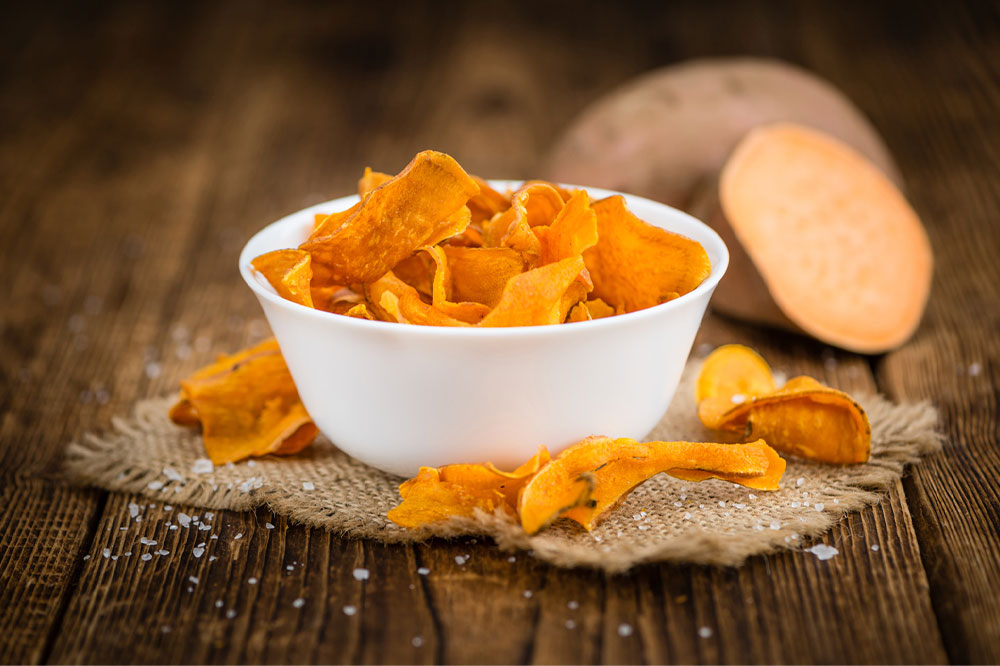
Sweet potatoes are rich in beta-carotene and vitamins and can help boost ovarian health. They can also contribute to reducing the impact of ovarian cancer on the body.
Tomatoes
Tomatoes are excellent sources of lycopene, which can lower one’s risk of breast and ovarian cancer. Tomatoes may be consumed as salads or be used in gravies, soups, juices, smoothies, etc.
Avocados
Besides being rich sources of folic acid and vitamin E, which help with fertility and ovulation, avocados contain phytonutrients, which prevent cell damage. Hence, they should be a part of one’s meal plan while recovering from ovarian cancer.
The most common treatment options prescribed for ovarian cancer are surgery and chemotherapy. While this condition is difficult to diagnose early, individuals with histories of breast cancer or those who have family members having suffered from breast or ovarian cancer must undergo genetic screening promptly to avoid complications. A healthy lifestyle during and after treatment is essential to heal from this condition.