9 popular ways to remove unwanted hair
Whether for aesthetic or functional purposes, many people remove unwanted hair from their bodies, particularly on their upper lip, chin, cheeks, back, legs, armpits, fingers, feet, and toes. Hair removal needs for each individual differ based on their skin type, time commitment, budget, and even the part of the body. This article lists a few common methods of hair removal that can help you get rid of unwanted hair. Check them out.
- Shaving: Shaving is one of the first methods of hair removal most people try. It involves using a razor to cut hair from the skin’s surface. This method of hair removal is quick and easy to use. Depending on your budget, you can invest in various razors, from inexpensive disposable razors (used on wet skin) to high-cost electric razors (for dry skin).Results from a shave can last anywhere from one to three days. However, improper use of a razor can lead to nicks, cuts, and skin irritation. Since razors cut the hair at an angle, it will likely grow back more bluntly, making regrowth more noticeable. For a smooth shave, it is advisable to hydrate the skin well and use shaving cream or foam.
- Tweezing: This method is commonly used around the eyebrow, nose, and stray facial hair. It involves using a pair of tweezers to pull out the hair. Once tweezed, hair may take up to eight weeks to reappear. The only downside to tweezing is that it is time-consuming and cannot be done on hairier body parts like the legs.
- Waxing: Waxing can be done at home or in a salon. It involves using a sticky, warm wax for your hair growth. Then, a piece of fabric is pressed over it so the hair sticks to it. The strip is then quickly pulled in the opposite direction, pulling out the hair underneath. The hair must be at least one-quarter of an inch long for ideal results. It can take up to six weeks for the hair to grow back.This is an effective solution for removing large amounts of hair with one swift motion. It is often used to tackle hair growth on the legs, back, arms, chest, armpits, eyebrows, and bikini area. Some people may also experience side effects such as pain, skin burns, red bumps, irritation, ingrown hair, infections, and torn skin.
- Sugaring: As a technique, sugaring is rather similar to waxing. It includes using a warm, sticky, sugary substance with a honey-like consistency. This is smeared onto the skin and then pulled off using strips of fabric. One of the biggest advantages of sugaring is that it is easier to clean up than waxing. It can be made at home using staple kitchen ingredients such as sugar, lemon juice or vinegar, and water.
- Threading: Threading is commonly used to remove facial hair, especially around the eyebrows. It is offered as a service at many salons, but it can also be done at home with a little practice. This technique uses a thin cotton or polyester thread that is twisted several times and rolled over areas of hair growth. This helps pull the hair out of the follicle. It is a quick and precise method to shape your eyebrows.Unlike tweezers, you can remove a short hairline in a single move. Some people may experience tiny amounts of pain during threading. It may also cause your skin to become slightly red and irritated. Applying aloe vera or a quality moisturizer after threading can help soothe the area and help the skin return to its natural state.
- Depilatory creams: Depilatory creams use the chemical thioglycolate mixed with sodium hydroxide or calcium hydroxide. This combination can melt the hair away by disrupting the bonds between the hair and the skin.
Instructions for application and use can generally be found on the packaging. These creams are an effective way to use large amounts of hair at home. They also work well on thick, coarse hair. However, due to their strong chemical properties, they can be abrasive and irritate sensitive skin. To understand if these creams work for you, try a patch test on a small part of your body around 48 hours before your intended use. - Plucking: If you spot a single stray hair, you can also try pulling it out with your fingers. This method of hair removal is inexpensive, as it requires no equipment. However, it can only be employed to remove stray, single strands of hair. It may be painful to pluck at your skin continually. For some people, pulling out hair may also devolve into a compulsive disorder called trichotillomania.
- Electrolysis: Electrolysis is a form of permanent hair removal performed at salons and dermatologist offices. It may take 12 to 18 months to receive the desired results from this treatment. During this procedure, a small needle is used to apply an electrical current to the follicle root and burn it so it stops producing more hair.
Once the treatment is completed, you do not require any maintenance sessions. However, it is also a costly form of hair removal. Additionally, it is known to hurt and pose risks such as infection, keloid scar formation, hyperpigmentation, or hyperpigmentation.
-
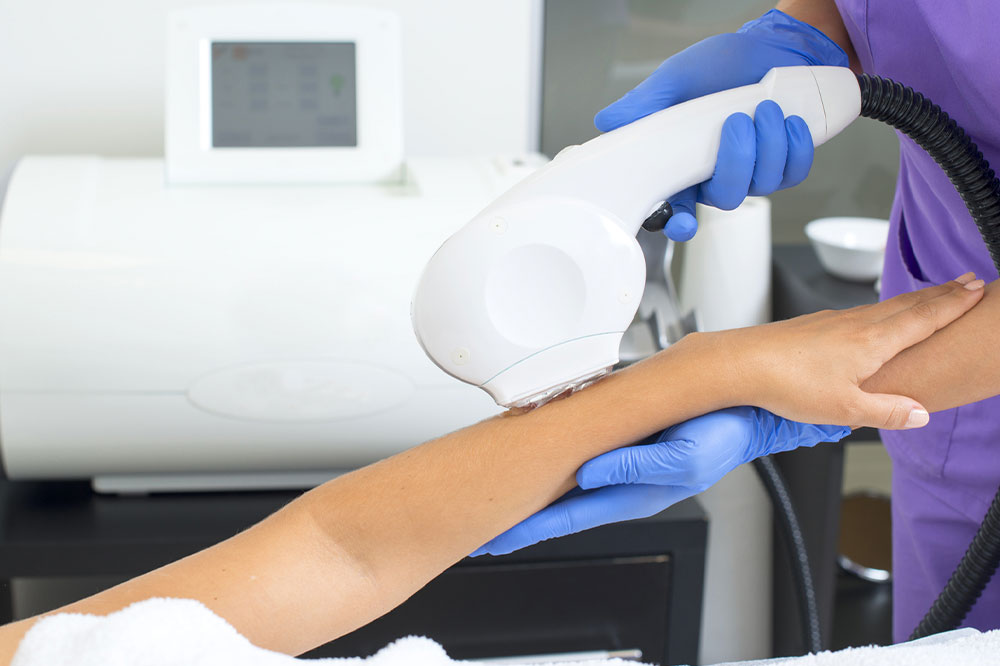
Laser hair removal: Laser hair removal is another form of permanent hair removal or reduction. It may take two to six treatments to show effects, and it requires maintenance sessions. A laser that emits light at various wavelengths, energy outputs, and pulse widths vaporizes the hair.
This treatment targets the melanin in the hair. It works best for light-skinned people with dark hair. Post-treatment, one may experience discomfort, swelling, or redness like a sunburn. Applying a cold compress can help reduce it. It is also advisable to stay out of the sun after a laser hair removal session.