9 benefits of educational toys for child development
Children are imaginative, curious, and energetic. With never-ending curiosity about the world, they often seek avenues for exploration. There are numerous ways to enhance their overall development, and parents and educators can make learning fun and engaging. Among these approaches, educational toys are one of the most effective ways of improving their cognitive, motor, and social skills. Here are some proven benefits of these toys that contribute to holistic growth and learning:
1. Boosts IQ
Educational toys help stimulate the minds of children, make new neurological connections, and gradually increase IQ levels. They are to improve their memory and literacy while making learning enjoyable and engaging. Some games that boost the intelligence quotient include memory cards, board games, and matching games.
2. Enhances sensory development
Children use all of their five senses, including touch, smell, taste, hearing, and sight, to explore the world around them. Toys include different textures, colors, and noises, which can help develop these senses. For example, musical instruments for children can develop their auditory perception, while bright-colored toys can enhance their visuals.
3. Improves motor skills
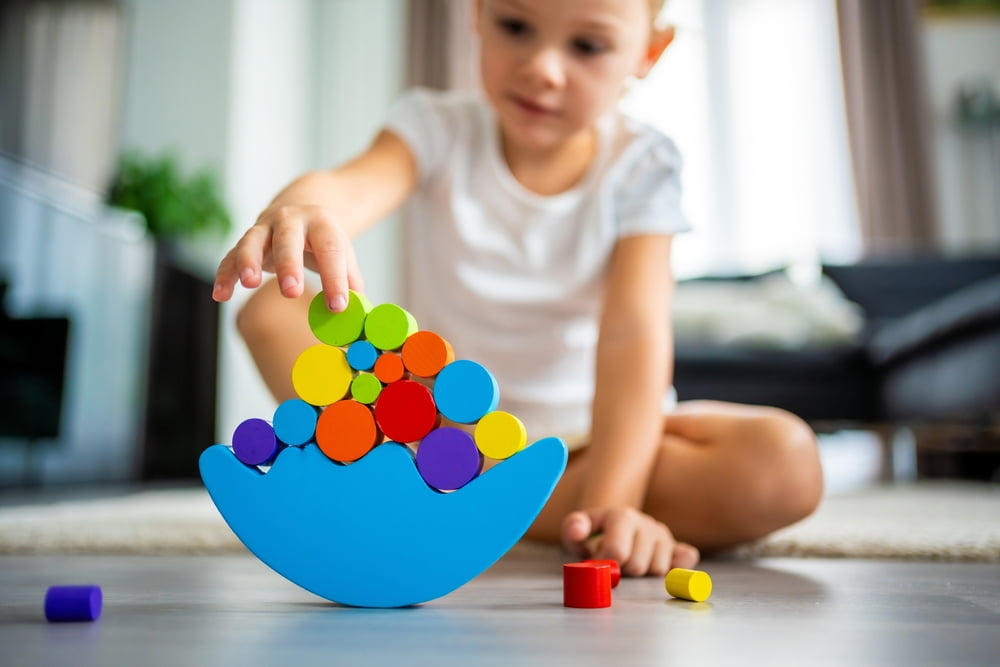
Motor skills refer to one’s ability to perform physical movements and effectively coordinate the muscles and limbs to carry out various tasks. Developing motor skills in children involves teaching them how to navigate their environment safely and effectively, and toys serve as valuable tools. Regular play contributes to motor skill development, but educational toys uniquely expedite the process. For example, construction toys and wooden blocks help children understand measurement, balance, gravity, shape, and weight. It’s not merely a pastime but a dynamic educational experience where children simultaneously develop their motor skills and cultivate a sense of care and precision.
4. Enables emotional and social development
Educational toys can boost social interaction and cooperative play among children. This, in turn, leads to enhanced emotional and social intelligence. Through these experiences, children learn to navigate social situations, build relationships, and understand their own emotions and those of others. For example, kitchen playsets, doctor kits, or construction sets can encourage imaginative play and help them develop socially. Even team sports games like cooperative ball toss can help children learn the importance of teamwork, communication, and shared goals. Similarly, storybooks focusing on social situations and emotions can enhance their emotional quotient, or EQ.
5. Helps them learn about cause and effect
Children need to understand that their actions have certain consequences. This understanding can be attained by playing with toys, and in turn, it nurtures critical thinking skills as they begin to anticipate the cause-and-effect relationships in various scenarios. For instance, throwing a toy in water and getting it splashed on their face can teach them the effect of their actions.
6. Enhances problem-solving skills
Many games require children to follow step-by-step instructions to achieve their desired outcome. Some toys also require them to put in more energy, thinking, and attention. Since children usually have a shorter attention span, these engaging toys that take time to show results can help boost these skills. For example, classic board games like Monopoly and Scrabble may provide opportunities for turn-taking, strategic thinking, and fair play. Puzzles that require mathematical solutions or different ways of thinking can also hone their problem-solving skills and improve hand-eye coordination.
7. Boosts creativity
Creativity is a vital aspect of a child’s development. By nature, children are incredibly creative and imaginative. So, it’s the right time to let their imagination run wild and hone their natural talents with toys. This is also a safe way for them to explore their curiosity about their surroundings and the environment, experiment with the toy tools, and think outside the box. Some of the most creative educational toys can include clay, art supplies, construction sets, and open-ended toys that allow them to express themselves freely. For example, playdough enables children to turn their drawings into 3D objects and strengthens the writing muscles.
8. Improves concentration
Children often struggle with short attention spans and usually lose interest in activities if they are not engaging enough. This can prove to be a challenge once they start school or study. So, educational tools can play a significant role in enhancing concentration at a young age. These toys make learning enjoyable and spark and sustain a child’s interest in various acts. For example, pegboards are educational tools that consist of flat boards with evenly spaced holes and typically come with pegs that fit into these holes. Playing with pegboards can help children improve their focus. It also involves hand-eye coordination to place the pegs into their designated holes. This intricate activity refines fine motor skills and enhances cognitive abilities.
9. Enhances language skills
Some educational toys, like Scrabble, reading, or games, can prove instrumental in developing their language skills. These toys often incorporate elements that promote language skills, including storytelling, vocabulary building, and communication. Board games, for example, encourage social interaction and teamwork, boosting verbal communication and enhancing a child’s ability to express themselves more effectively.